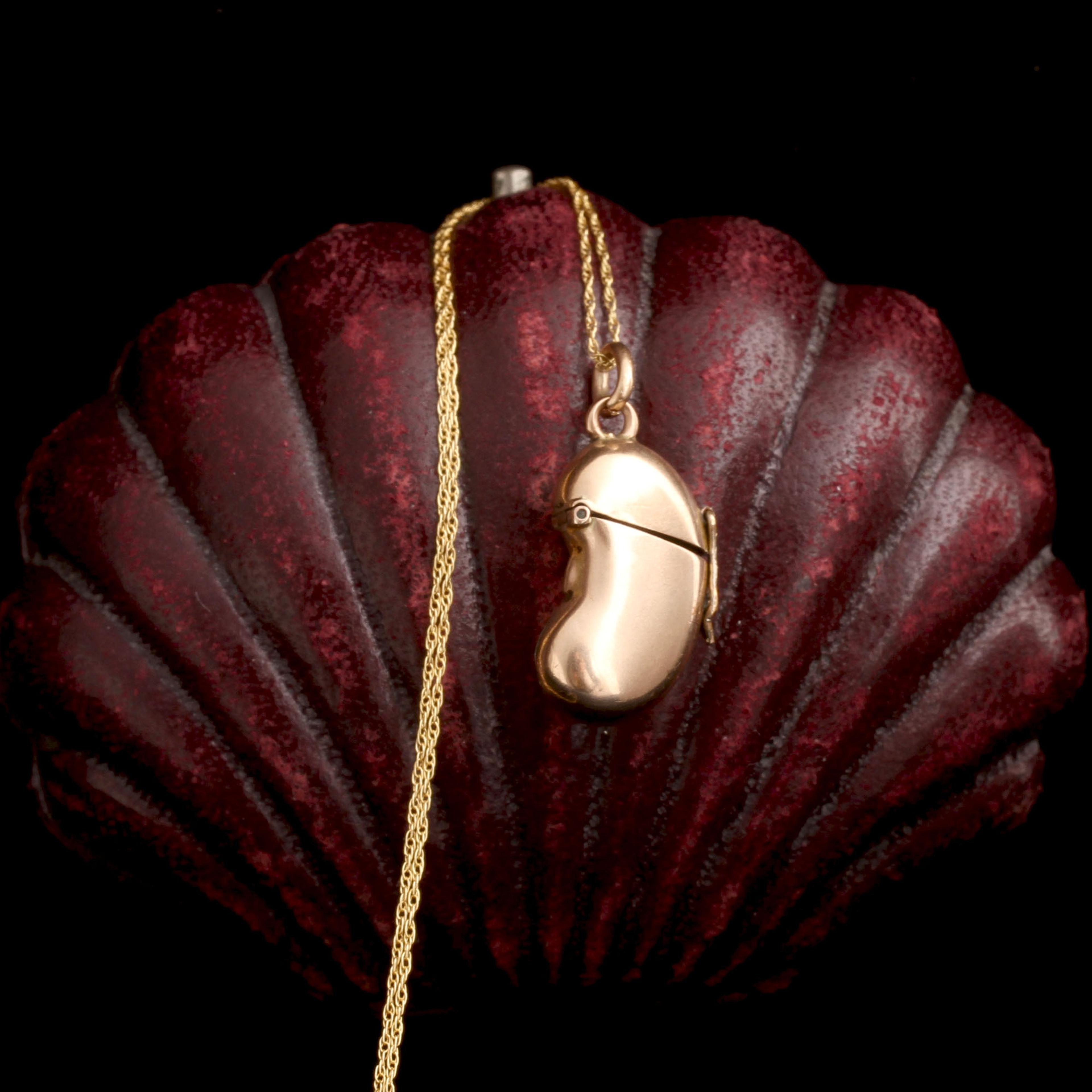
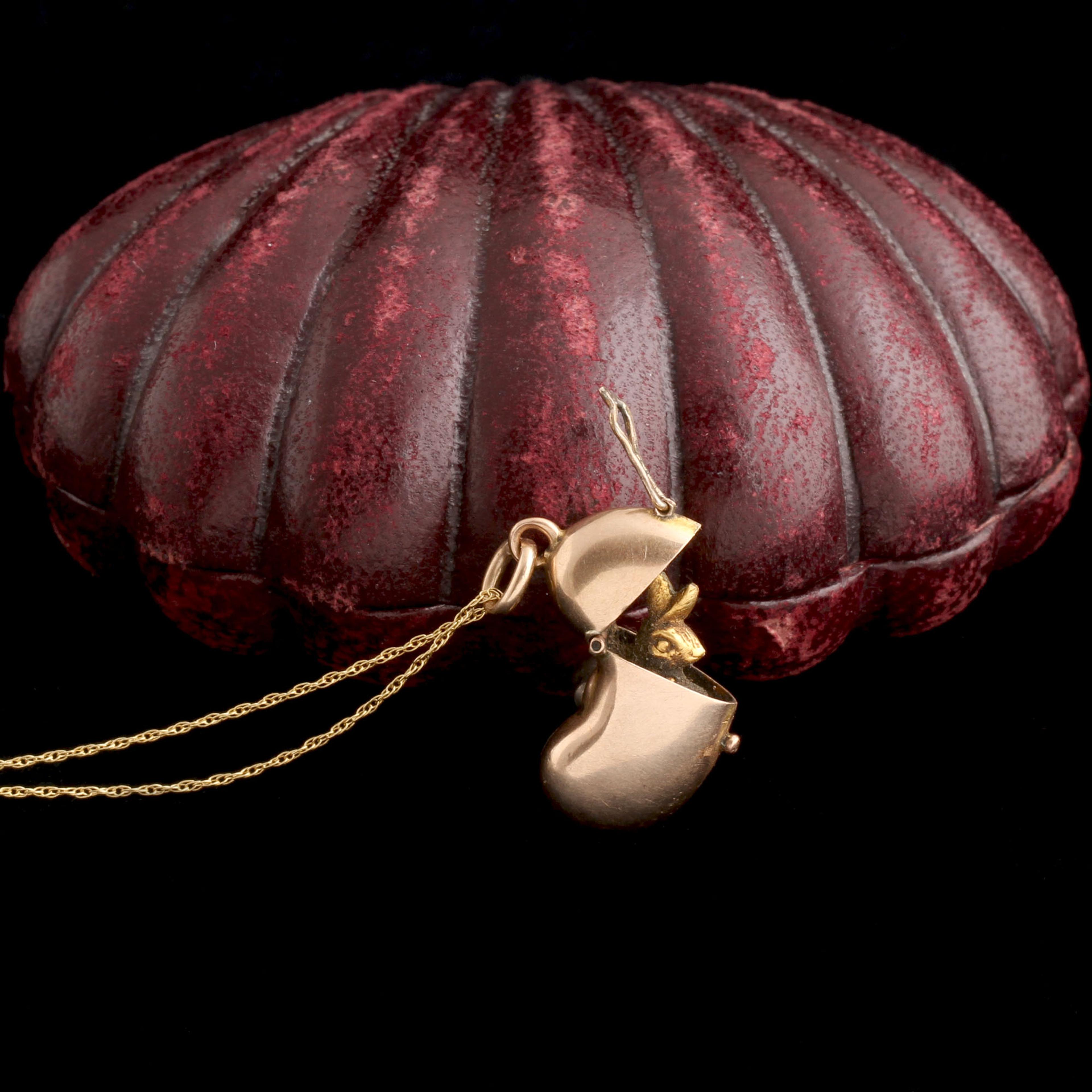
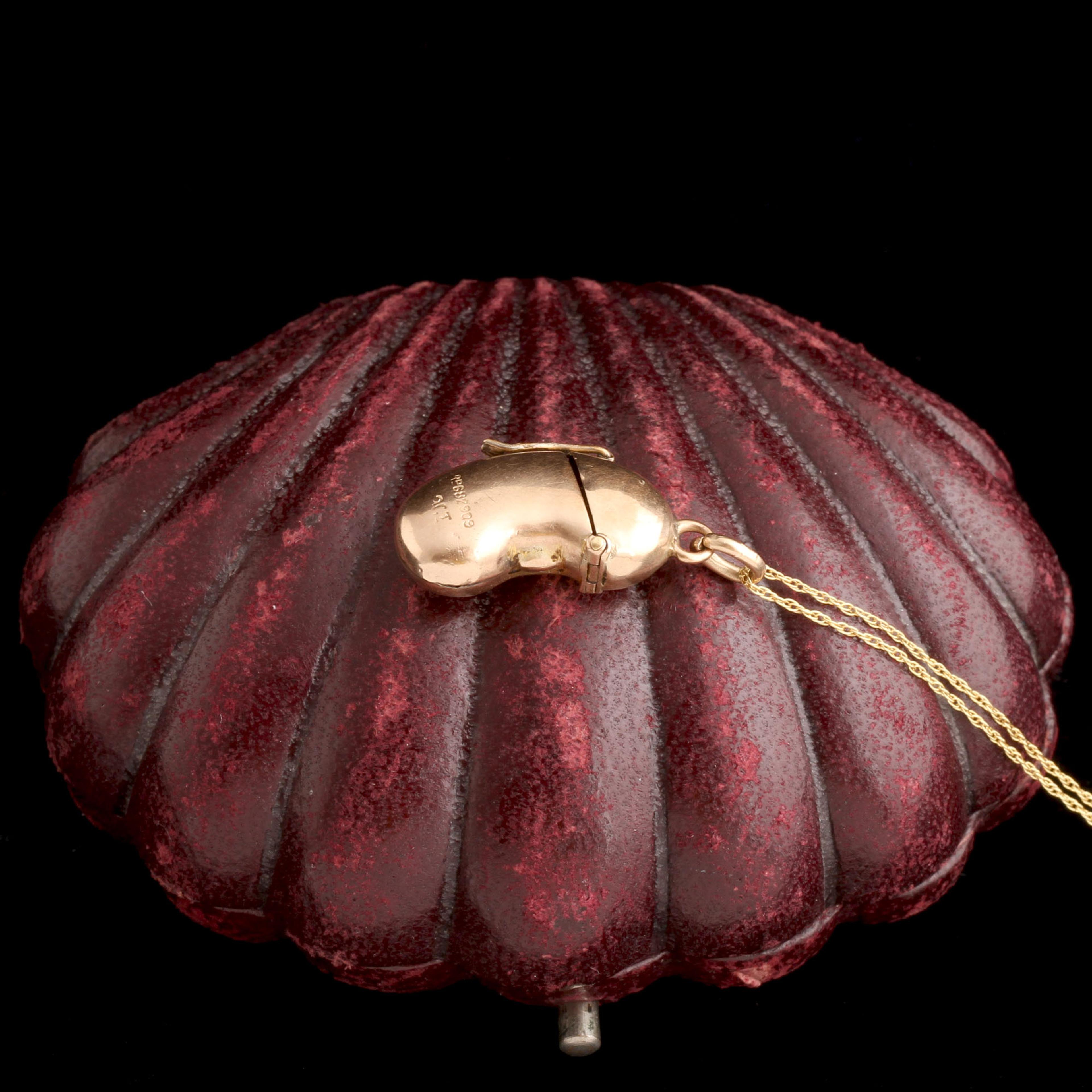
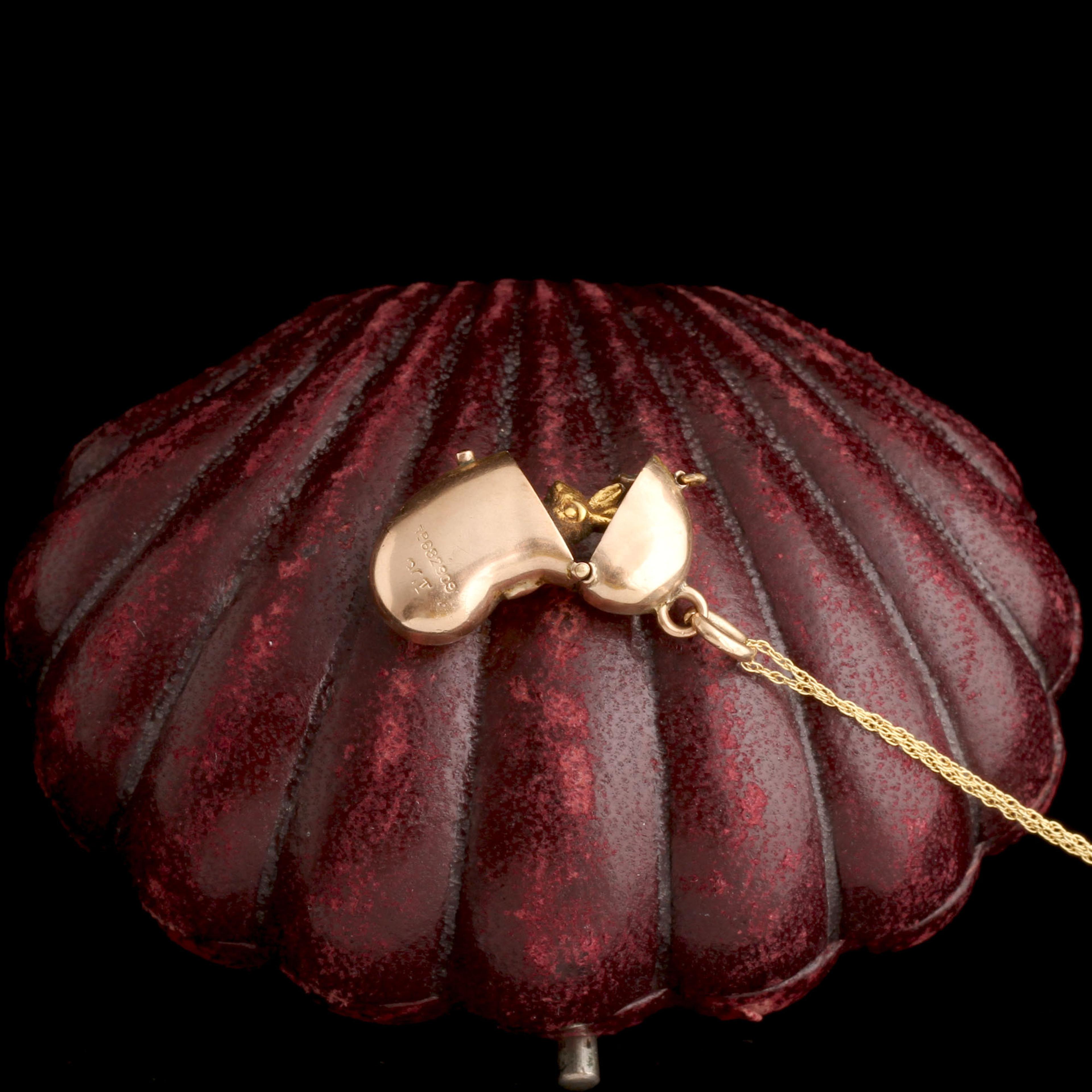
Have you ever said "rabbit rabbit" on the first day of the month for luck? Rabbits (and their feet) have long been carried as charms of good fortune. Tucked inside a lucky bean here, you get double the good stuff. In the 19th and early 20th centuries, beans were worn as were talismans of fertility and abundance. This locket was registered in the UK as design number 682909, which dates it to 1921.
thedetails
- Materials
9k gold (marked), new 14k gold chain
- Age
UK design registration number 682909 dates to 1921
- Condition
Very good - minor surface wear commensurate with age and use; stamped "Rd. 682909"
- Size
1" length including the bale, 3/8" width, 18" chain
Need more photos?
Send us an email to request photos of this piece on a model.
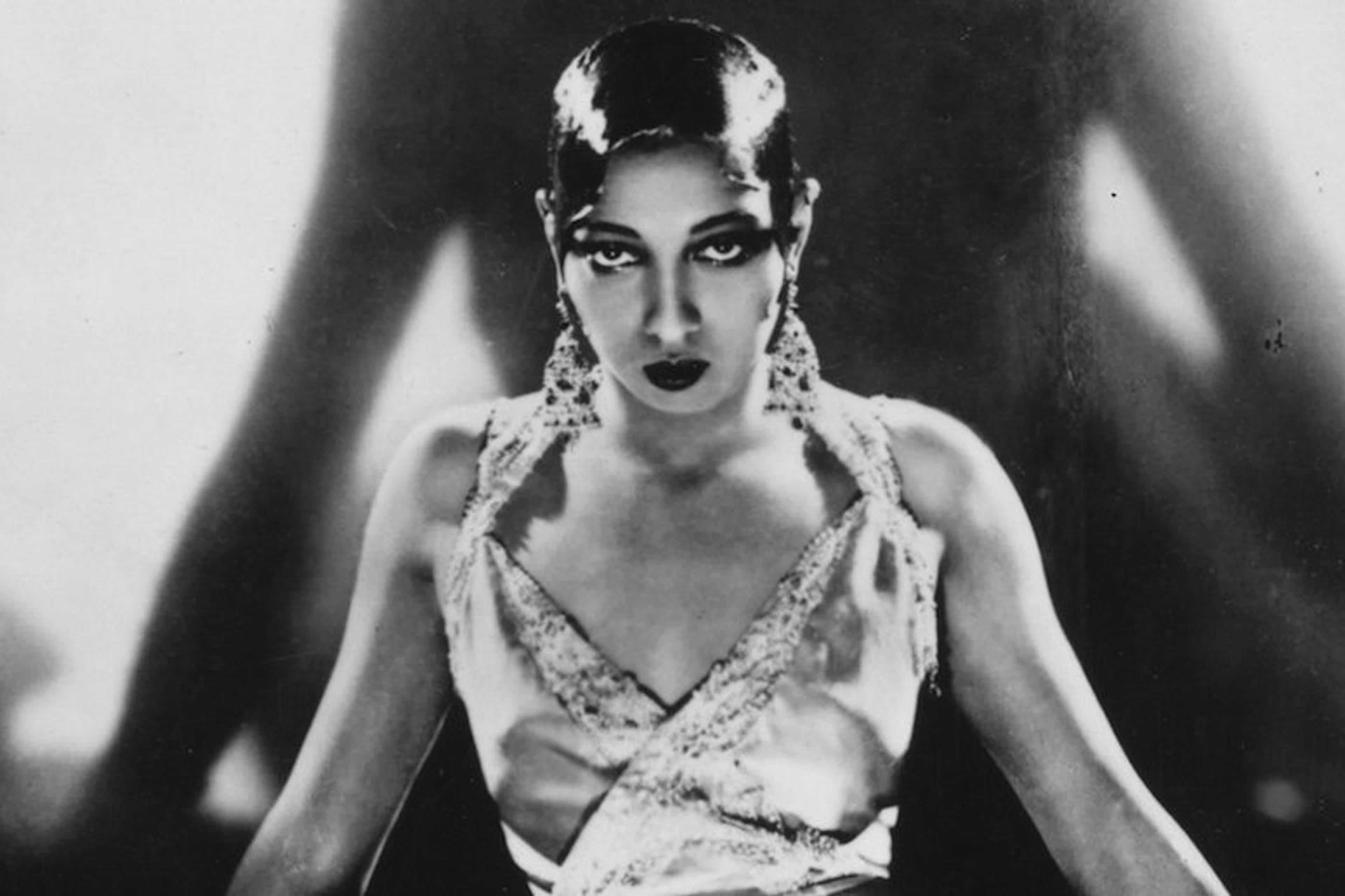
Aboutthe
Art DecoEra
1915 — 1940
Motifs like ziggurats and sunbursts, stripped of visual clutter, conveyed the optimism of an increasingly technological world. In jewelry, the predominant use of white metals let colorful gems take center stage. Stones that were opaque and true in color, like lapis lazuli, onyx, jade, coral, and opal were worked into designs alongside more precious and brilliant gems, like diamonds, sapphires, rubies, and emeralds. Extra-long beaded necklaces and tasseled “sautoirs” followed the narrow flapper silhouette. The baguette cut was an Art Deco innovation, and the decade saw increased use of other angular diamond cuts, like the precise calibré cut and the emerald cut. Synthetic colored gems, specifically ruby and sapphire, were celebrated as a scientific marvel. Marcel Tolkowsky, 21 years old at the time, published the design for the round brilliant cut in 1919.
please note:Terms of Sale
Antiques can be returned unworn and in original condition within 10 days of delivery for an exchange or refund minus the cost of shipping. Once a piece has been altered, including ring re-sizing, it is FINAL SALE.