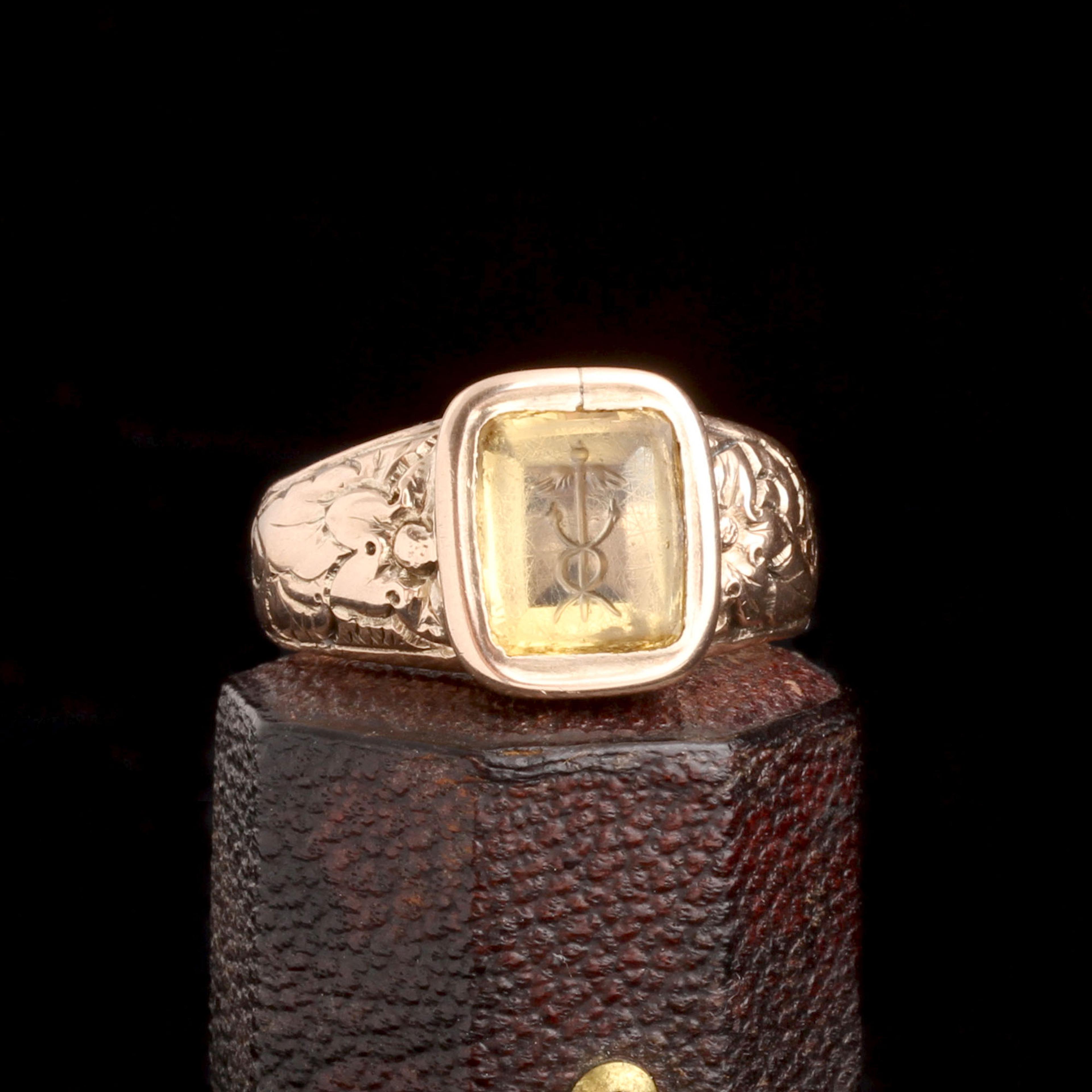
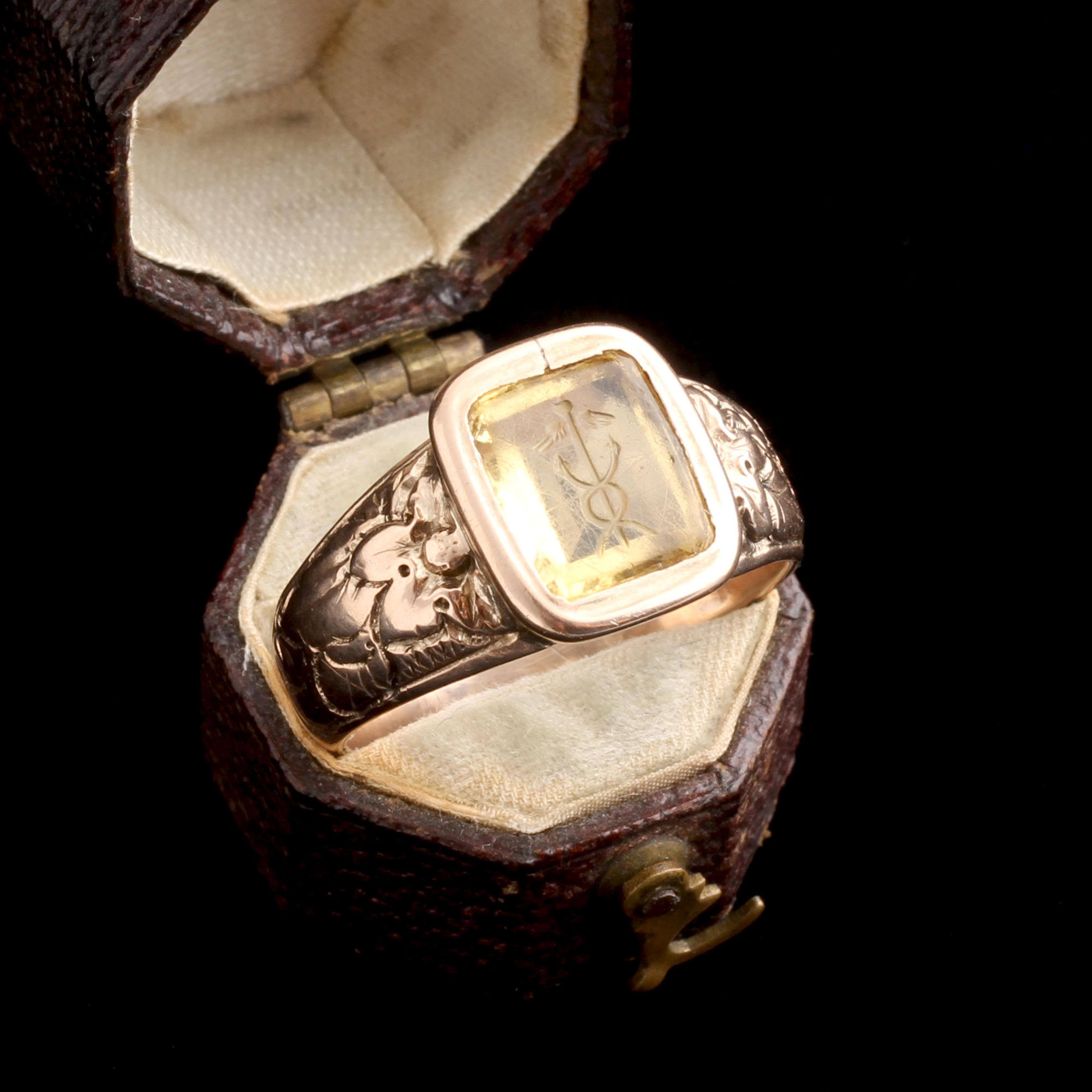
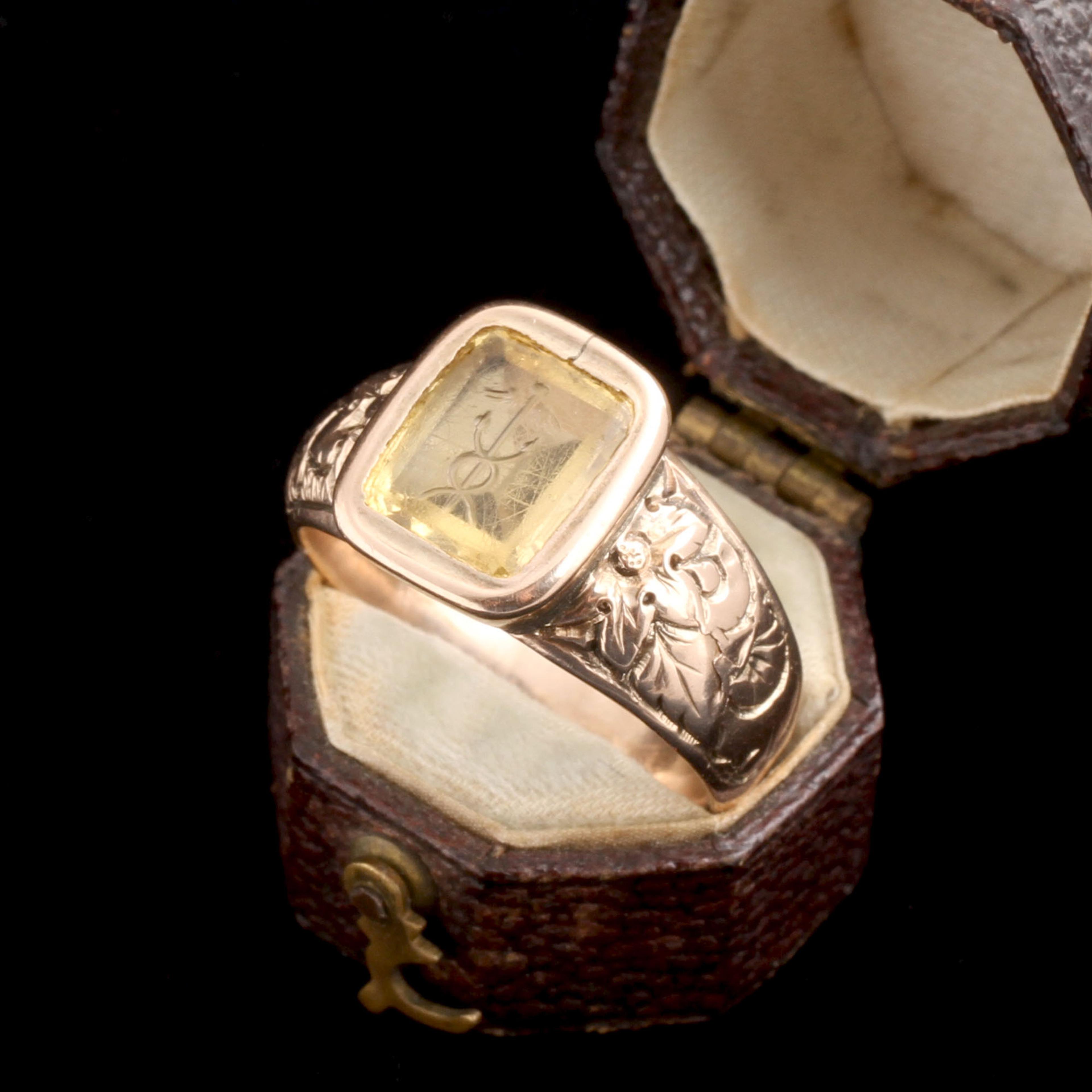
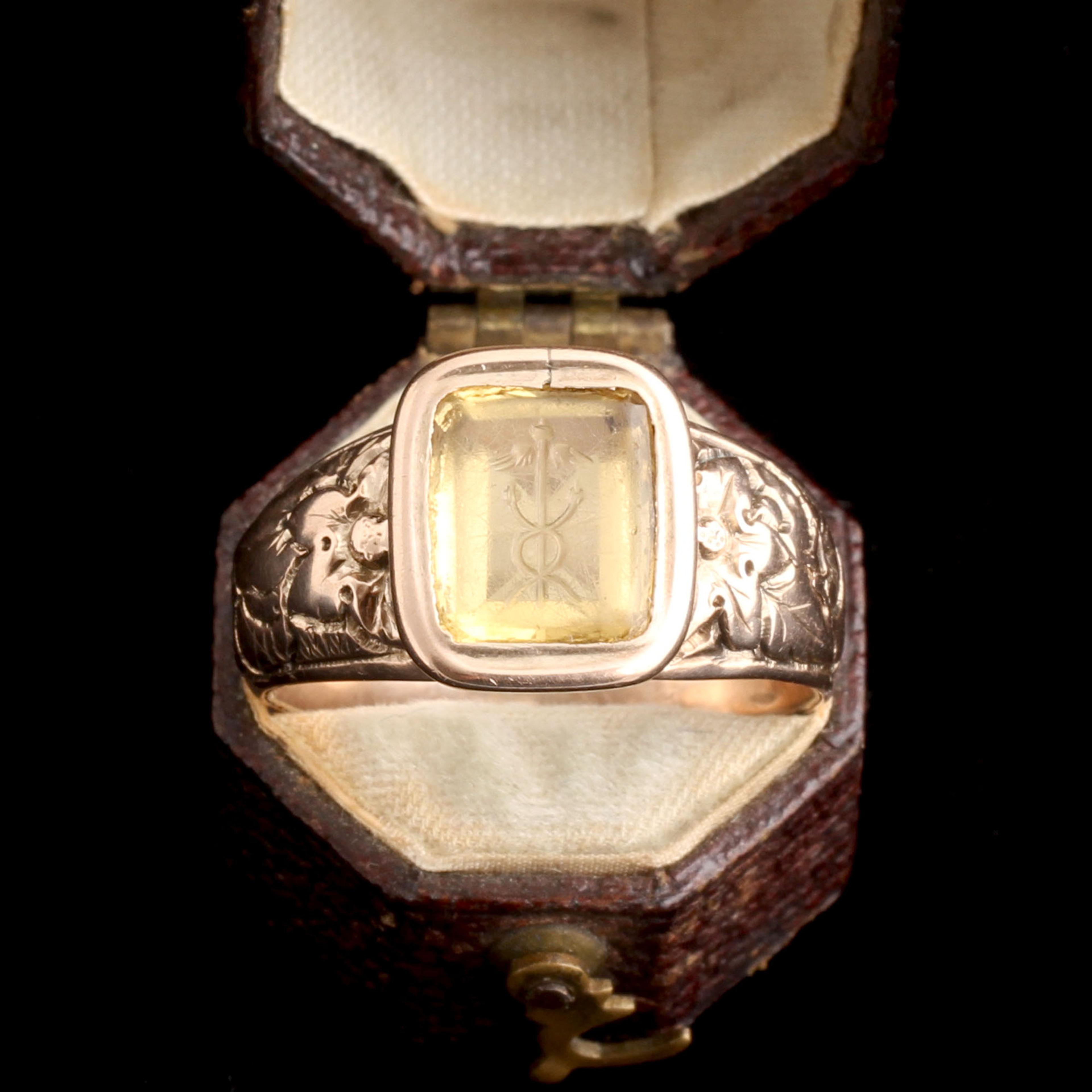
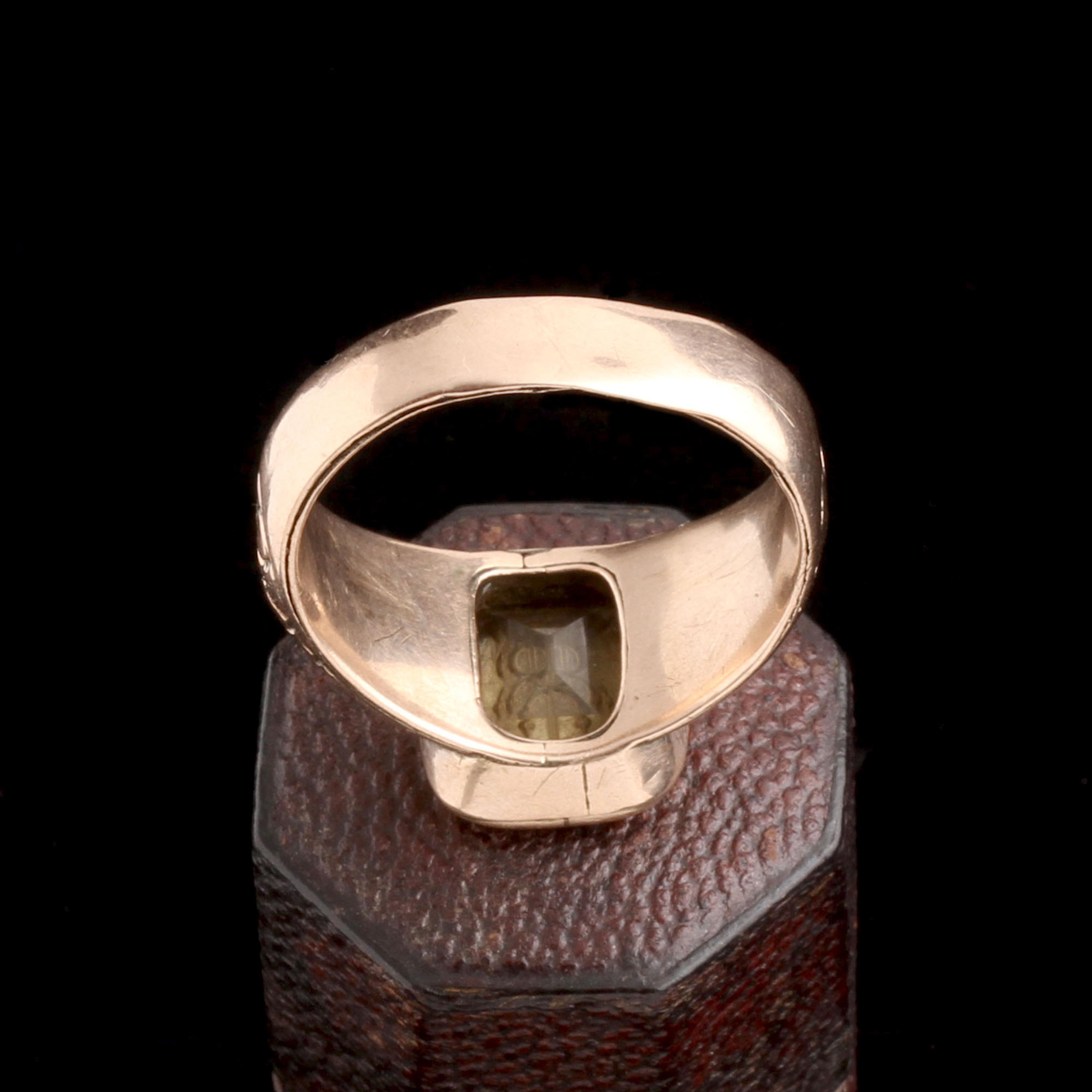
The caduceus - a staff entwined by two snakes and topped with a pair of wings - is the staff of Hermes, the messenger of the gods and patron of commerce, travelers, and alchemy. Used as a medical emblem today, the caduceus has no historical link to healing. The rod of Asclepius, god of medicine and healing, features just one snake coiled along its length is the true medical symbol. So why do we use the caduceus as the symbol of medicine? The mix up dates back to the early 20th century when a US Army medical officer confused the caduceus with a printer’s mark used on historical medical textbooks and adopted the two-snake emblem as the official US Army Medical Corps insignia in 1902. This early Victorian ring features a citrine intaglio caduceus set within an ornate repoussé ring.
thedetails
- Materials
10k gold (tests), citrine
- Age
c. 1840
- Condition
Good - some flattening at the back of the shank, seam between the inner hoop and repoussé top is visible
- Size
9, cannot be resized due to hollow construction; 12.9mm head, 4.6mm shank
Need more photos?
Send us an email to request photos of this piece on a model.
Aboutthe
VictorianEra
1837 — 1901
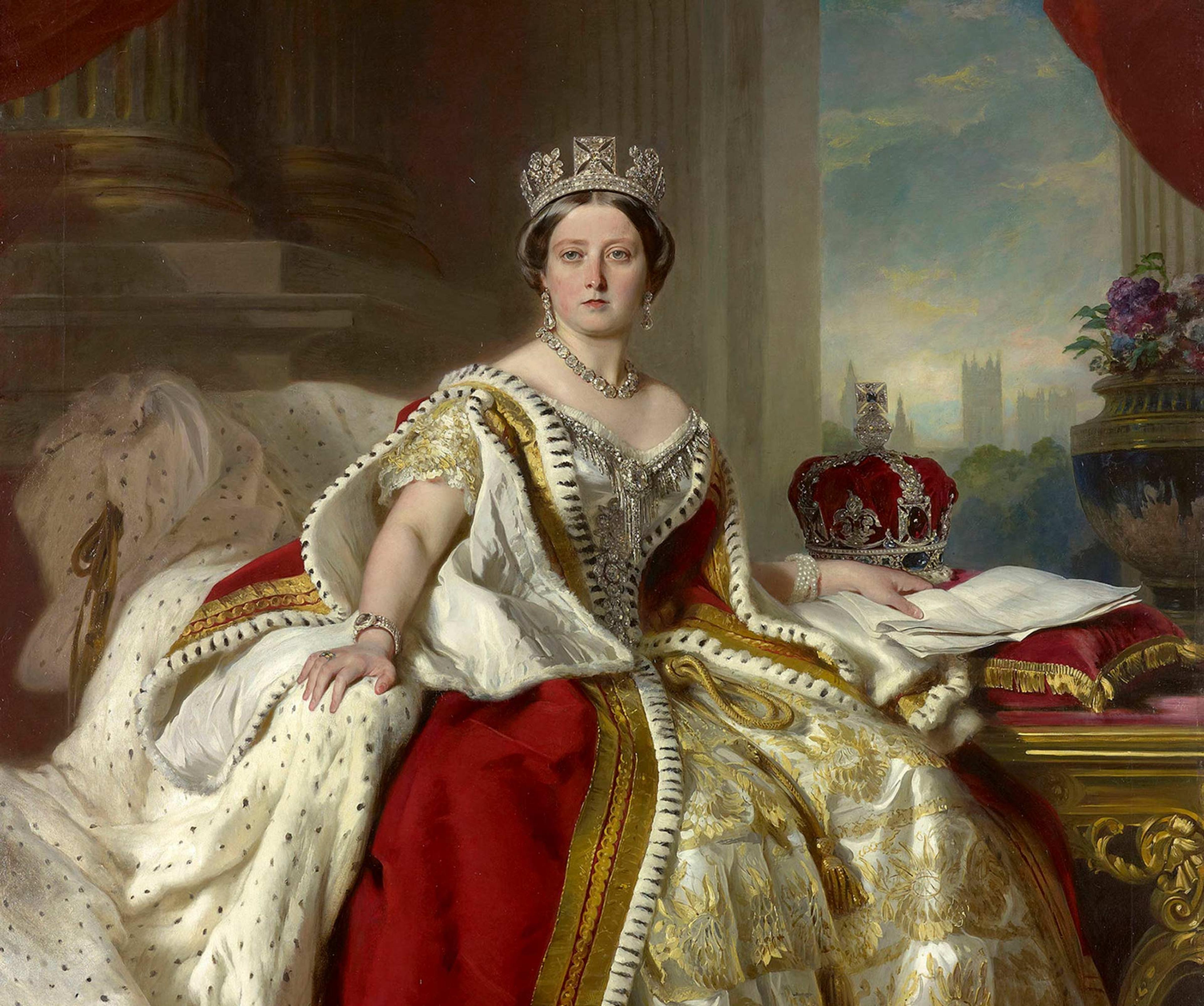
The Victorians were avid consumers and novelty-seekers, especially when it came to fashion, and numerous fads came and went throughout the 19th century. In jewelry, whatever fashion choices Queen V. made reverberated throughout the kingdom. The Romantic period reflected the queen’s legendary love for her husband, Albert.
Jewelry from this period featured joyful designs like flowers, hearts, and birds, all which often had symbolic meaning. The queen’s betrothal ring was made in the shape of a snake, which stood for love, fidelity, and eternity. The exuberant tone shifted after Prince Albert passed away in 1861, marking the beginning of the Grand Period. Black jewelry became de rigeur as the Queen and her subjects entered “mourning,” which at the time represented not just an emotional state, as we conceive of it today, but a specific manner of conduct and dress. She wore the color black for the remainder of her life, and we see lots of black onyx, enamel, jet, and gutta percha in the jewelry from this time. Finally, during the late Victorian period, which transitioned along with a rapidly changing world into the “Aesthetic Movement”, there was a return to organic and whimsical motifs: serpents, crescent moons, animals, and Japonaisserie designed for the more liberated “Gibson Girl”. During the second half of the 19th century, America entered the global jewelry market, with Tiffany and Co. leading the way. Lapidaries continued to perfect their techniques, and the old European cut emerged toward the end of the Victorian period. The discovery of rich diamond mines in South Africa made the colorless stones more accessible than ever before.
please note:Terms of Sale
Antiques can be returned unworn and in original condition within 10 days of delivery for an exchange or refund minus the cost of shipping. Once a piece has been altered, including ring re-sizing, it is FINAL SALE.