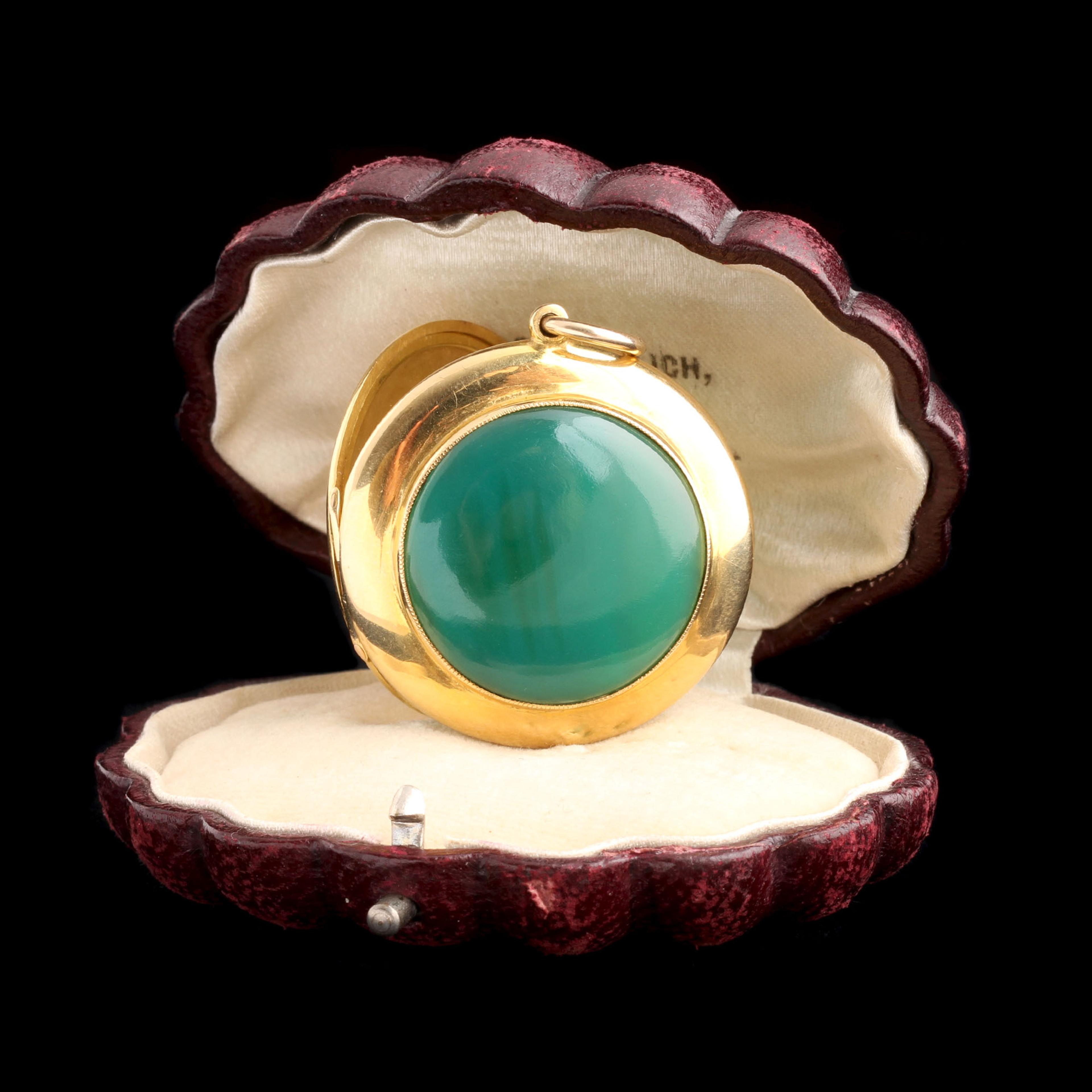
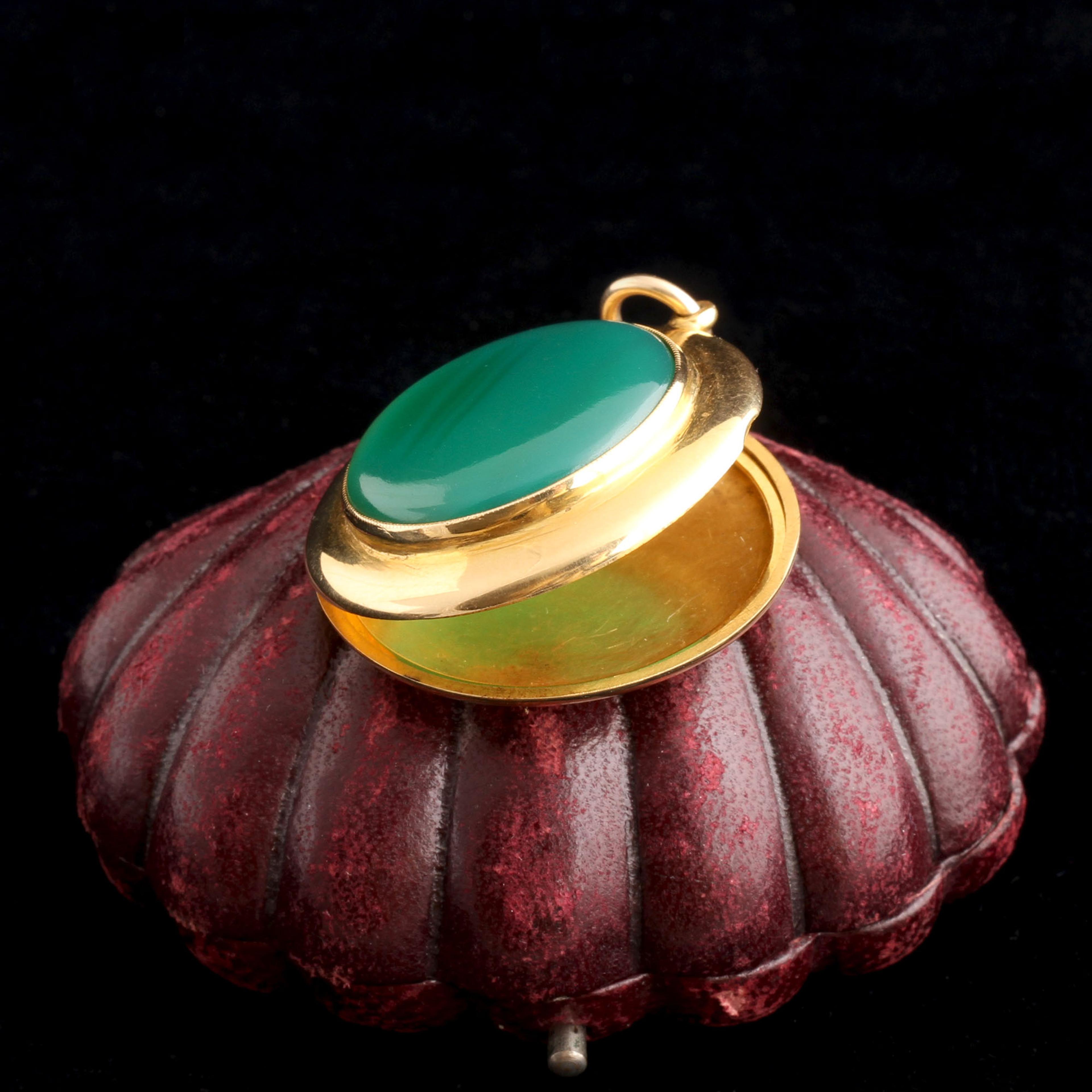
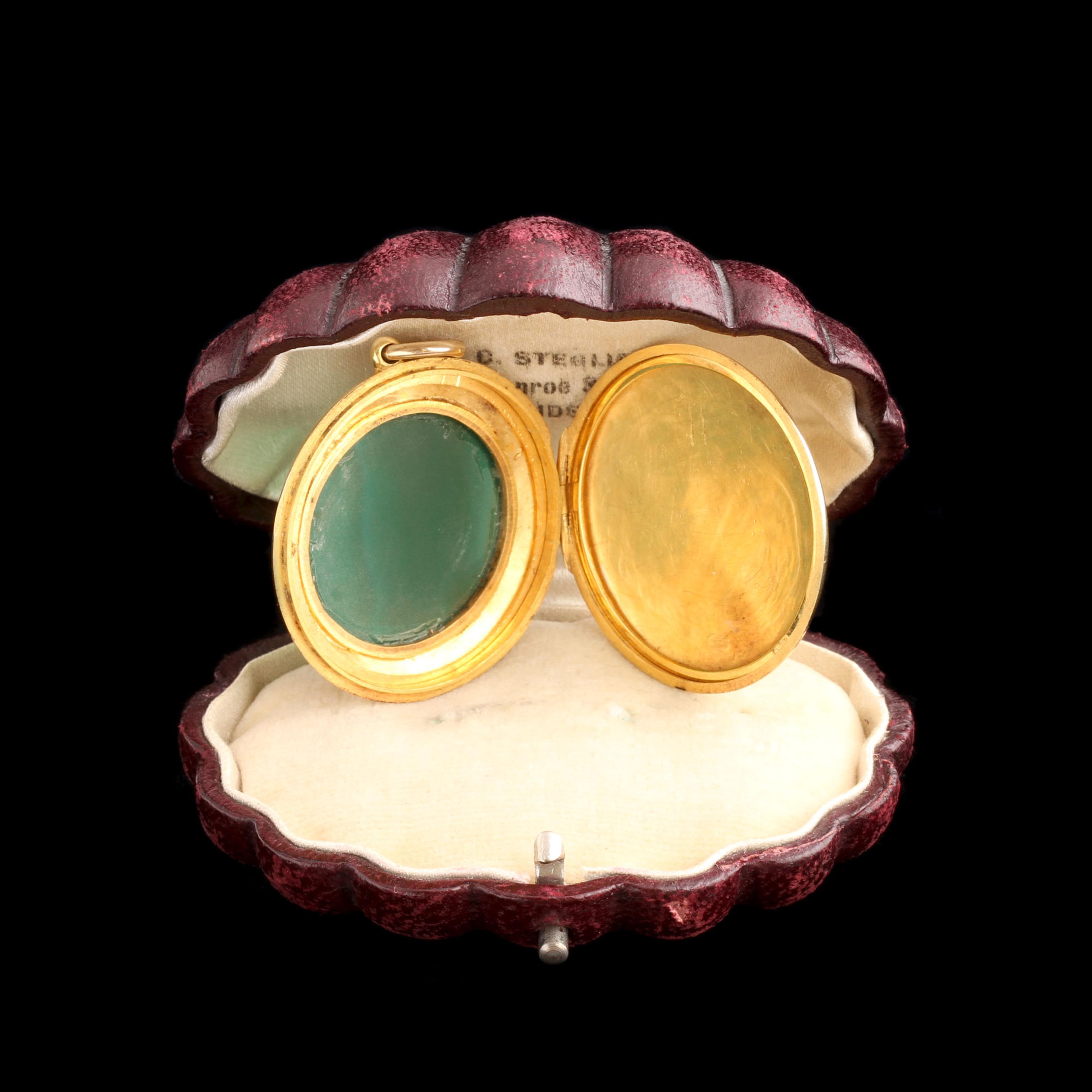
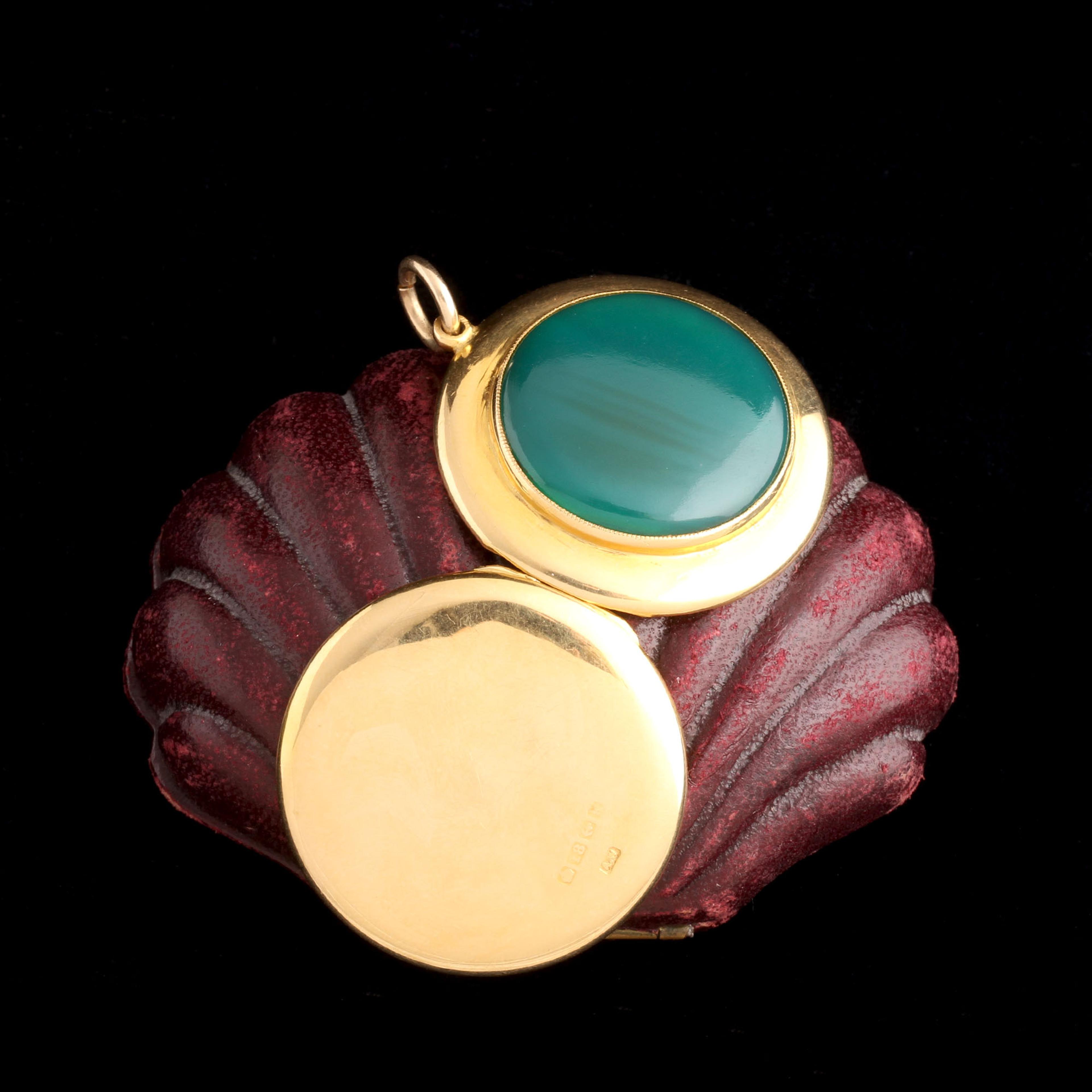
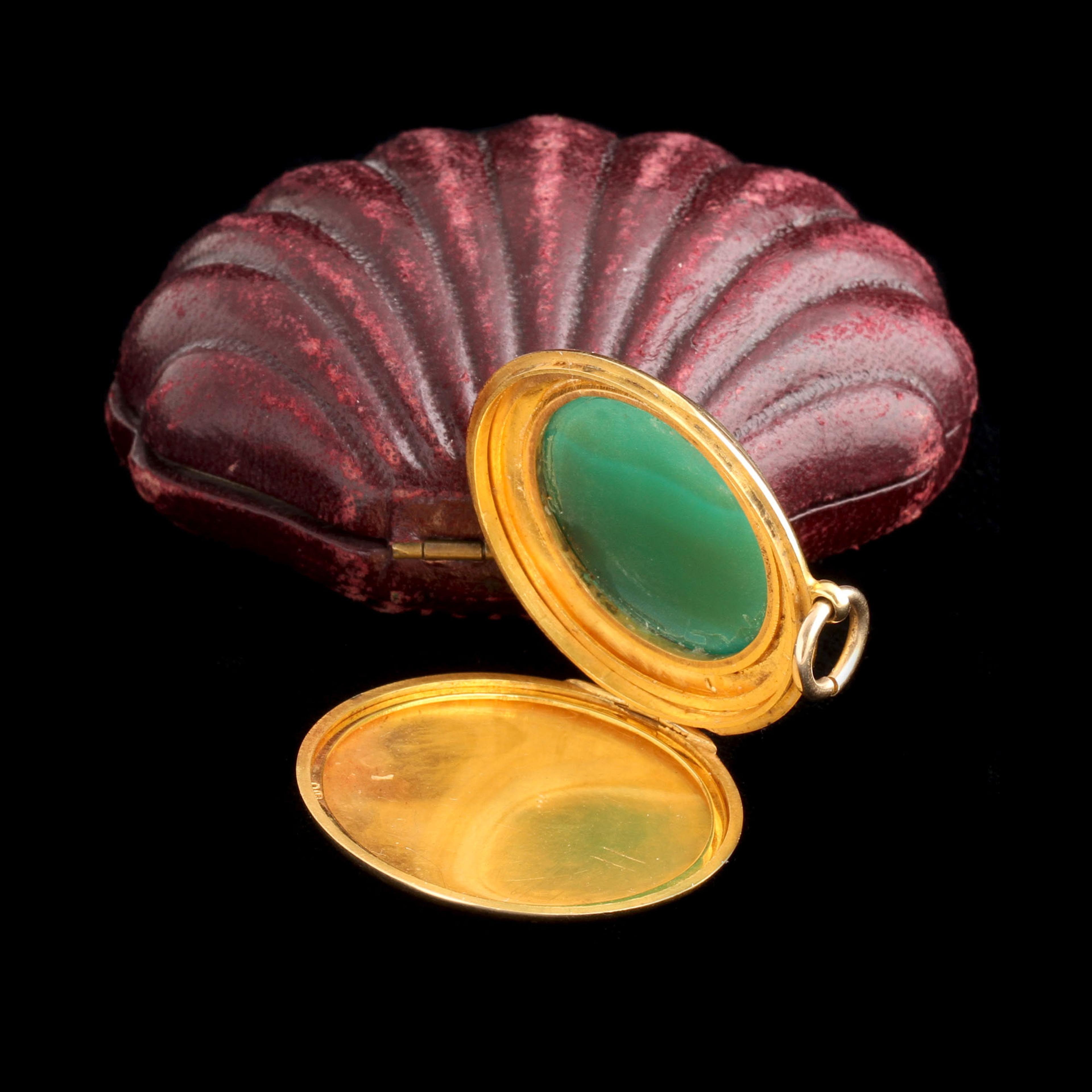
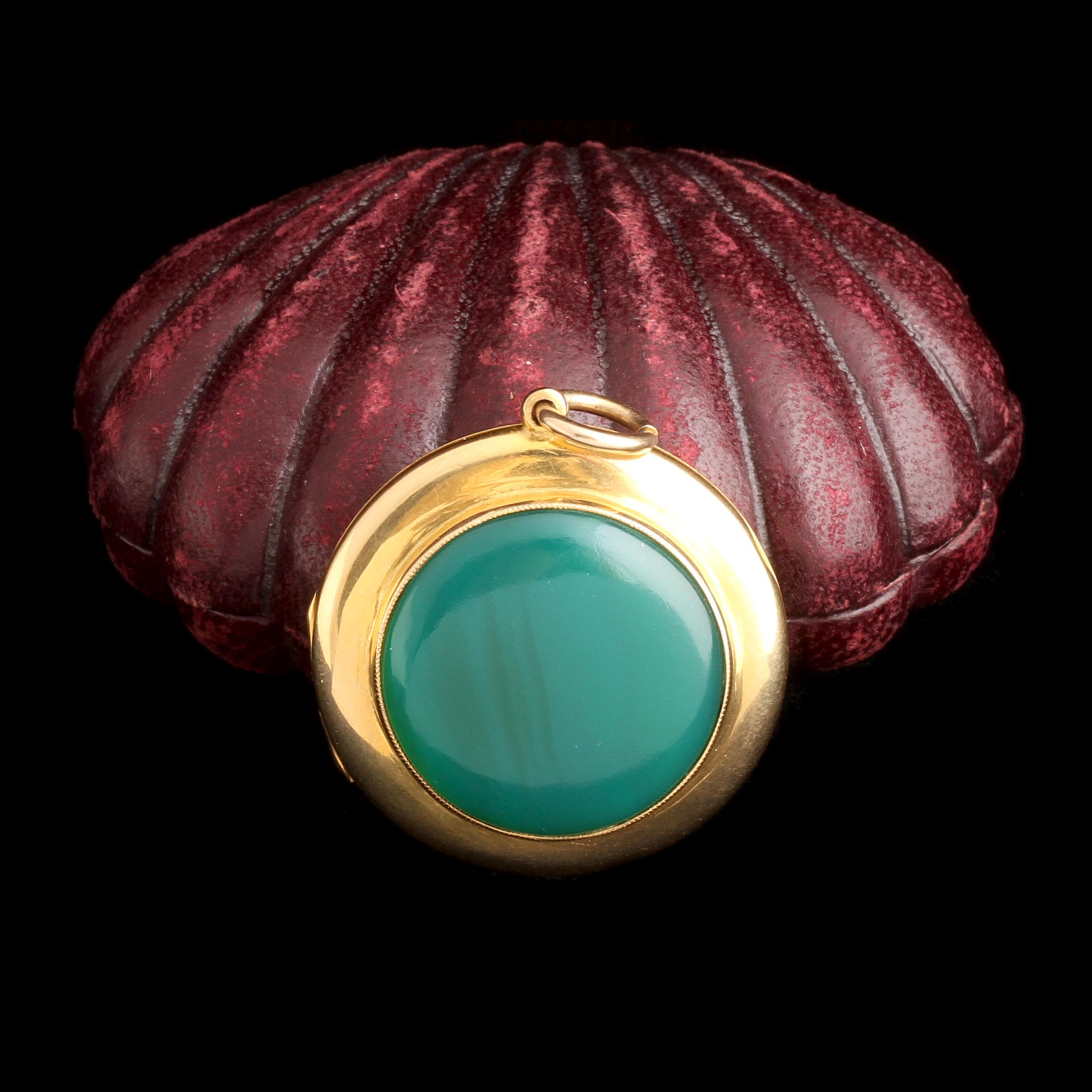
This enormous chrysoprase cabochon measures a full one inch in diameter, making it an unusually impressive example. Its beautifully even apple-green color goes well with the restrained 18k gold bezel. Edwardian jewelry often let exceptional stones speak for themselves, and this is a good example. By 1900, Australian chrysoprase had became the finest source in the world. Deposits discovered in Queensland during the late nineteenth century supplied English jewelers with vivid green stones like this one. While I can't say with certainty that this stone is Australian, it definitely dates from the period when Australian chrysoprase dominated the market.
thedetails
- Materials
18k gold (marked), 1" low dome round cabochon chrysoprase
- Age
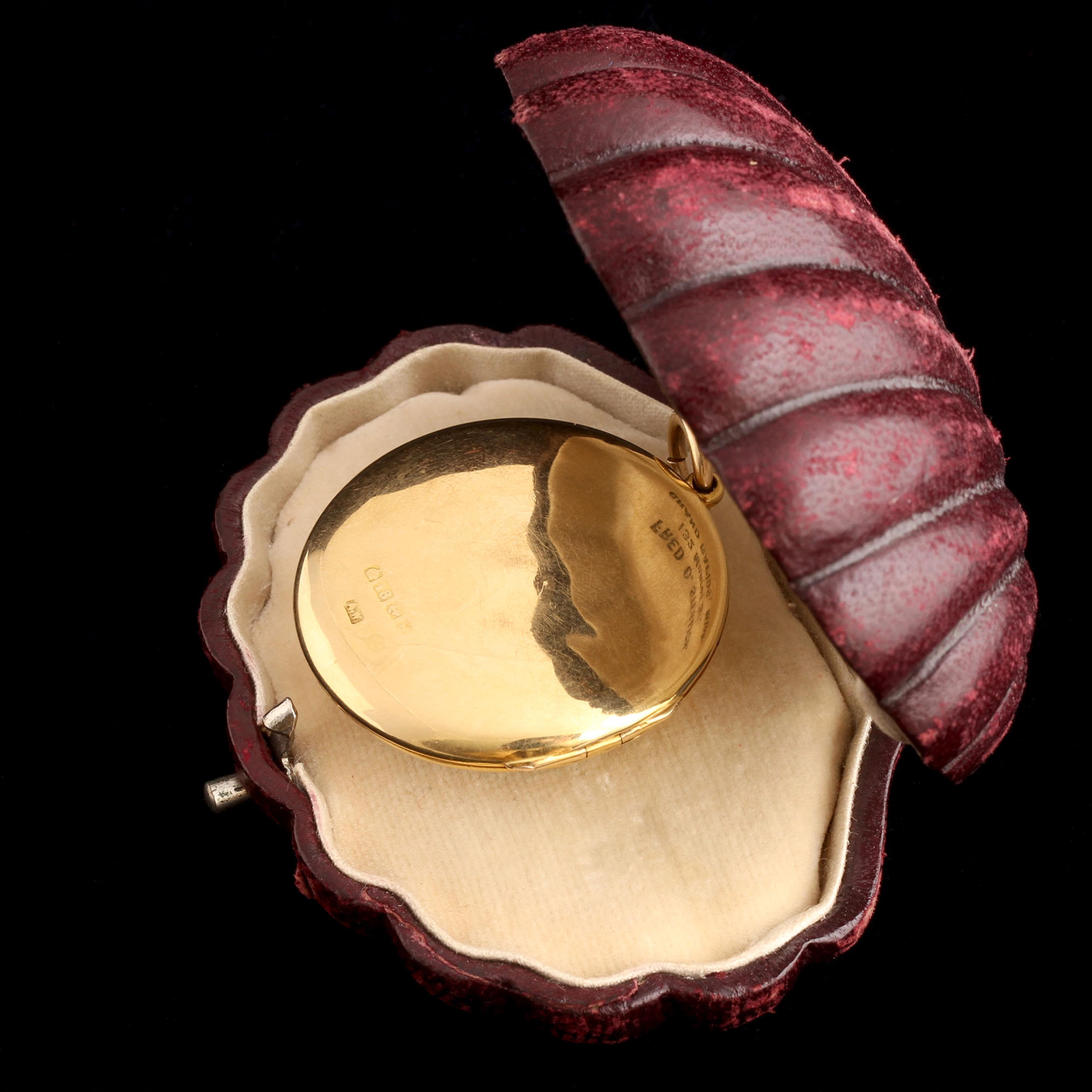
Birmingham assay marks for 1909
- Condition
Very good - a couple faint dents on the backside; British hallmarks
- Size
1 3/4" length including the bale, 1 3/8" diameter
Need more photos?
Send us an email to request photos of this piece on a model.
Aboutthe
EdwardianEra
1900 — 1910
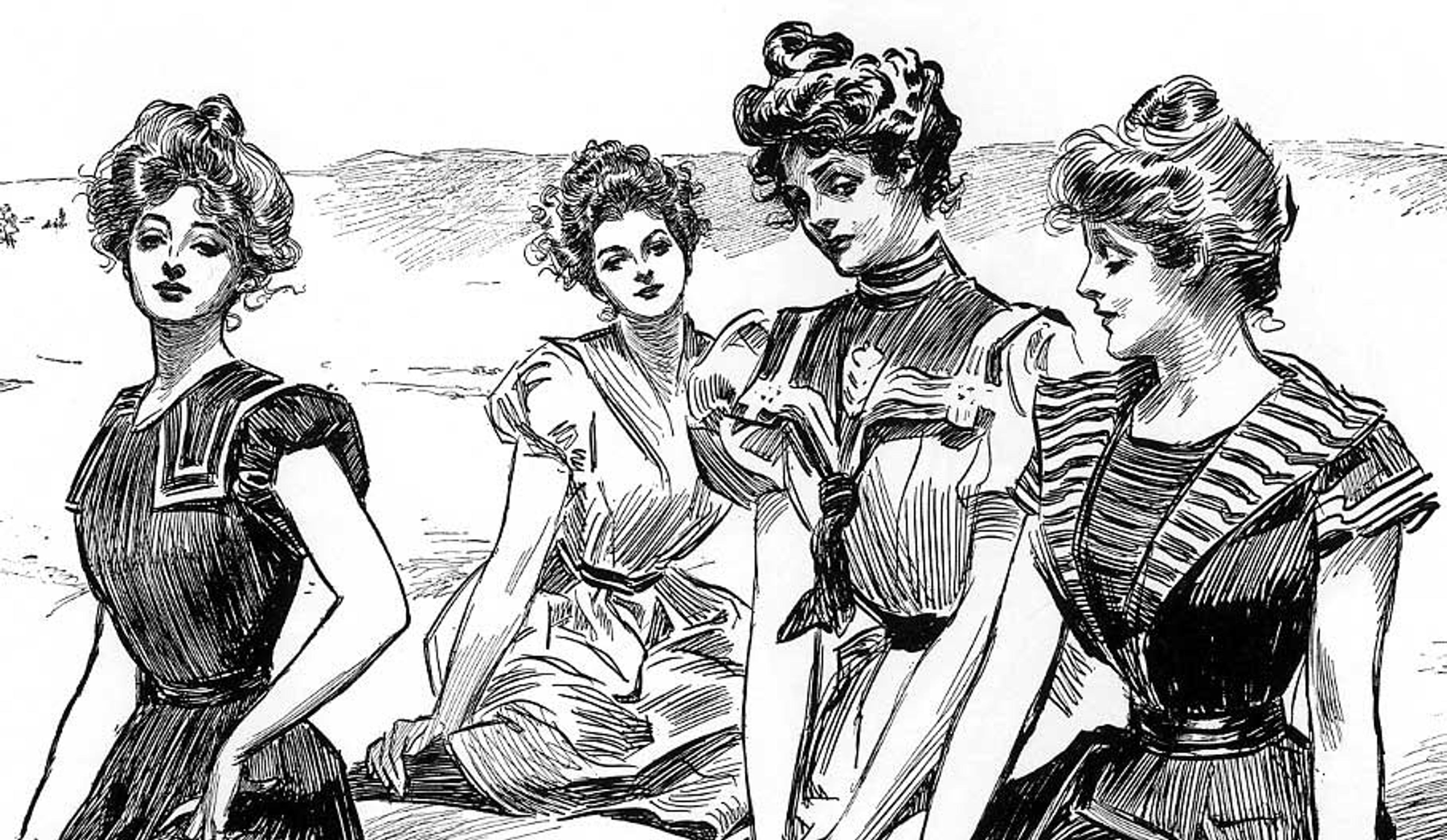
The jewelry tended toward airy lightness, often in the form of lacy filigree. The world was changing rapidly, but lots of the jewelry still reflected the Victorian ideals of decorum and femininity. Ancient Roman and Greek influences remained popular. “White” jewelry became popular as plentiful deposits of platinum were discovered in Russia and improved smelting technology made it possible for jewelers to work in the noble metal. Platinum was seldom used by jewelers in earlier years owing both to its scarcity and high melting point. The jewelry trade took advantage of its rigid strength to create opulent openwork settings for increasingly brilliant diamonds. The old European cut was perfected, rounder and squatter than old mine. This took stone-cutting one step closer to the mathematically perfect round brilliant cut, which is the most popular diamond cut today. The now-iconic square Asscher cut was patented in 1902. Hot on the heels of platinum, the alloy mixture that produces white gold was formulated and patented in 1915 in New York City. With Europe in the grip of WW1, the American jewelry industry was poised to become a world leader and innovator.
please note:Terms of Sale
Antiques can be returned unworn and in original condition within 10 days of delivery for an exchange or refund minus the cost of shipping. Once a piece has been altered, including ring re-sizing, it is FINAL SALE.