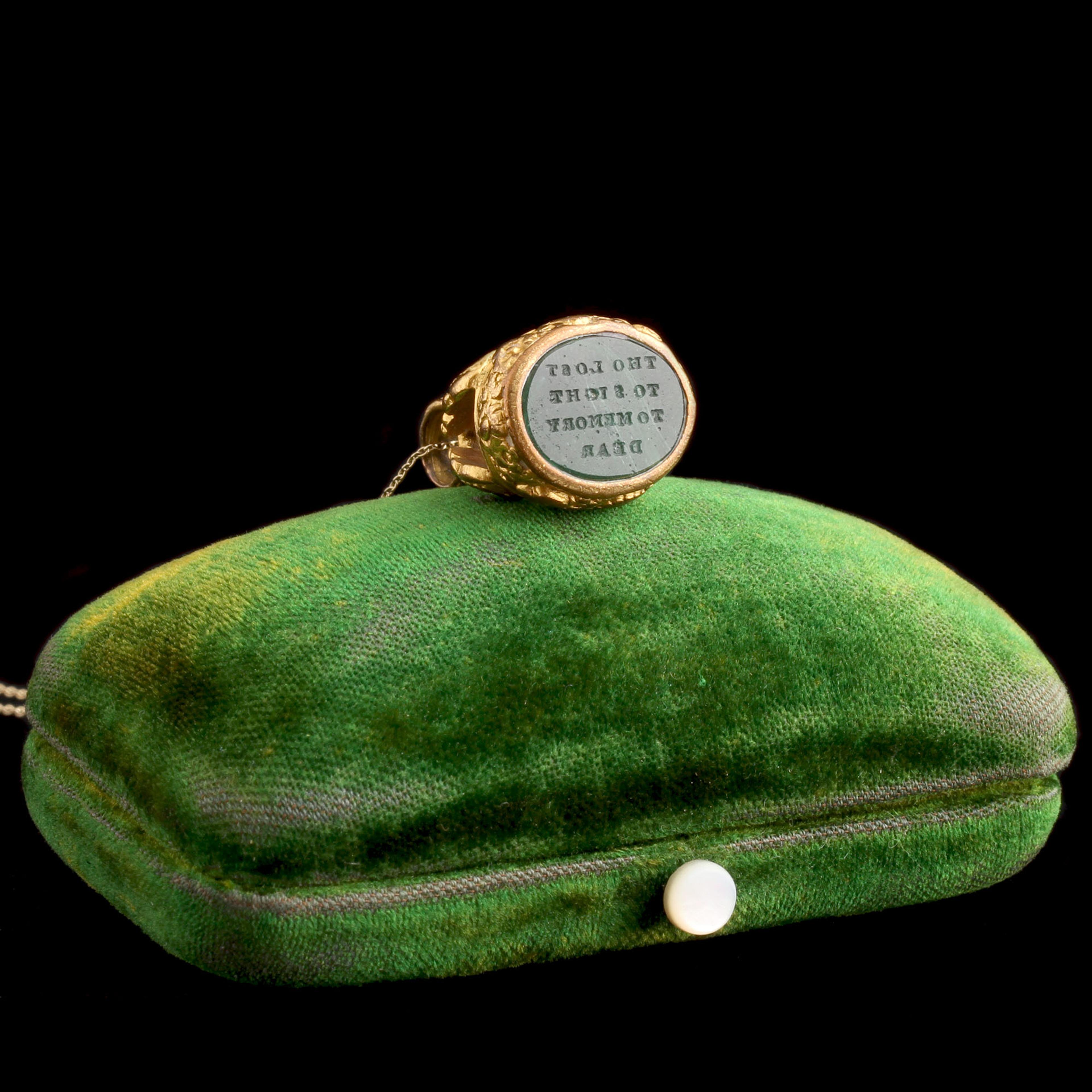
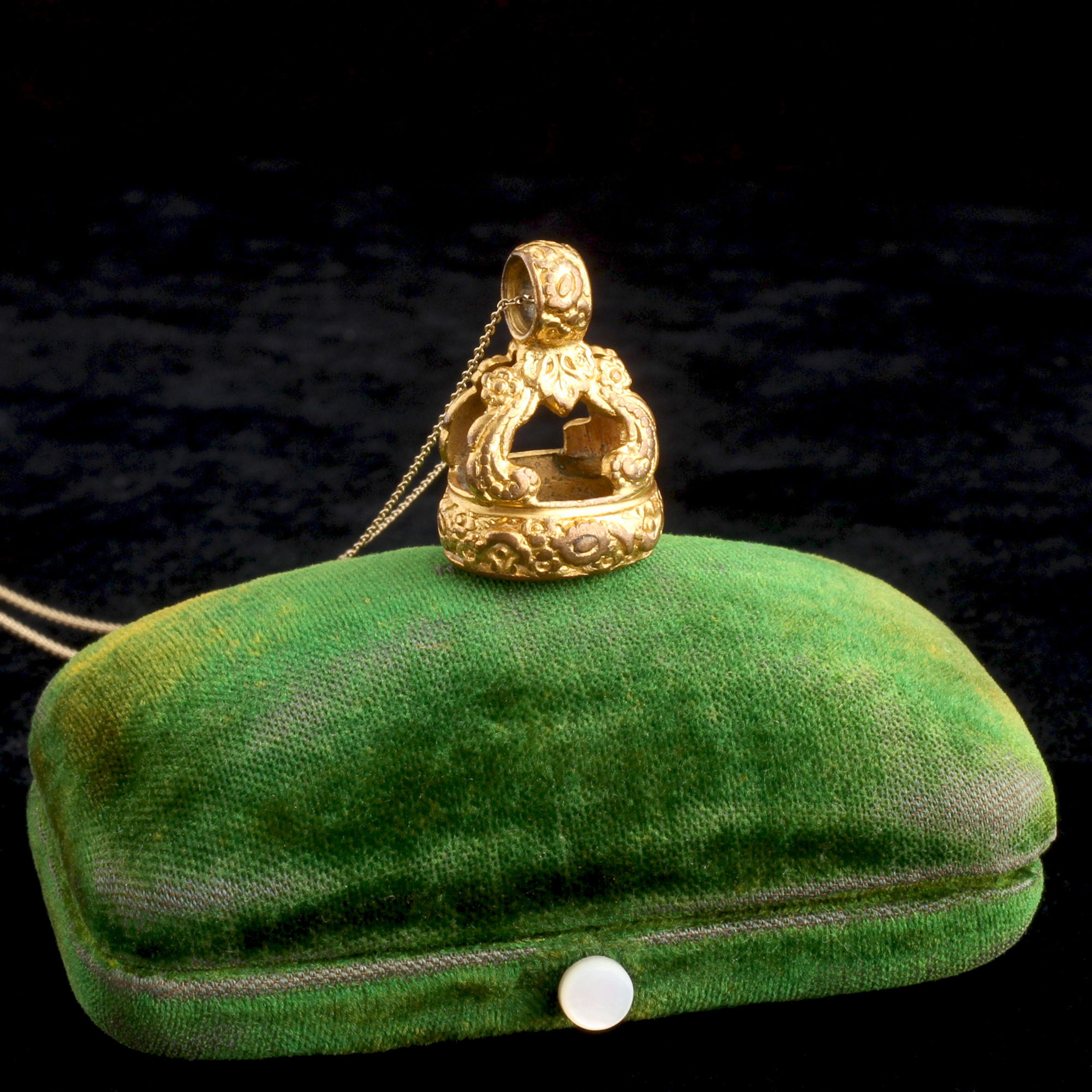

A dark green Tassie displays the phrase “Tho lost to sight, to memory dear”. It's not actually bloodstone, but it was made to look like it. These glass wax seals were made by being pressed into molds and were quite varied in their colors; they could imitate almost any gem. They were wildly popular in the 19th century as miniature stamps - press one into a blob of hot wax on an envelope to send a message on the outside of your letter to tease what might be inside the letter. "Tho lost...." was a message often exchanged between lovers or friends facing long separation. The sentiment reflects the Victorian preoccupation with loss, distance, and the endurance of affection across time and space.
thedetails
- Materials
gilt base metal fob, "bloodstone" glass seal, new 14k gold chain
- Age
c. 1830
- Condition
Very good - minor surface wear commensurate with age and use
- Size
5/8" x 1/2" seal, 18" chain
Need more photos?
Send us an email to request photos of this piece on a model.
Aboutthe
GeorgianEra
1714 — 1837
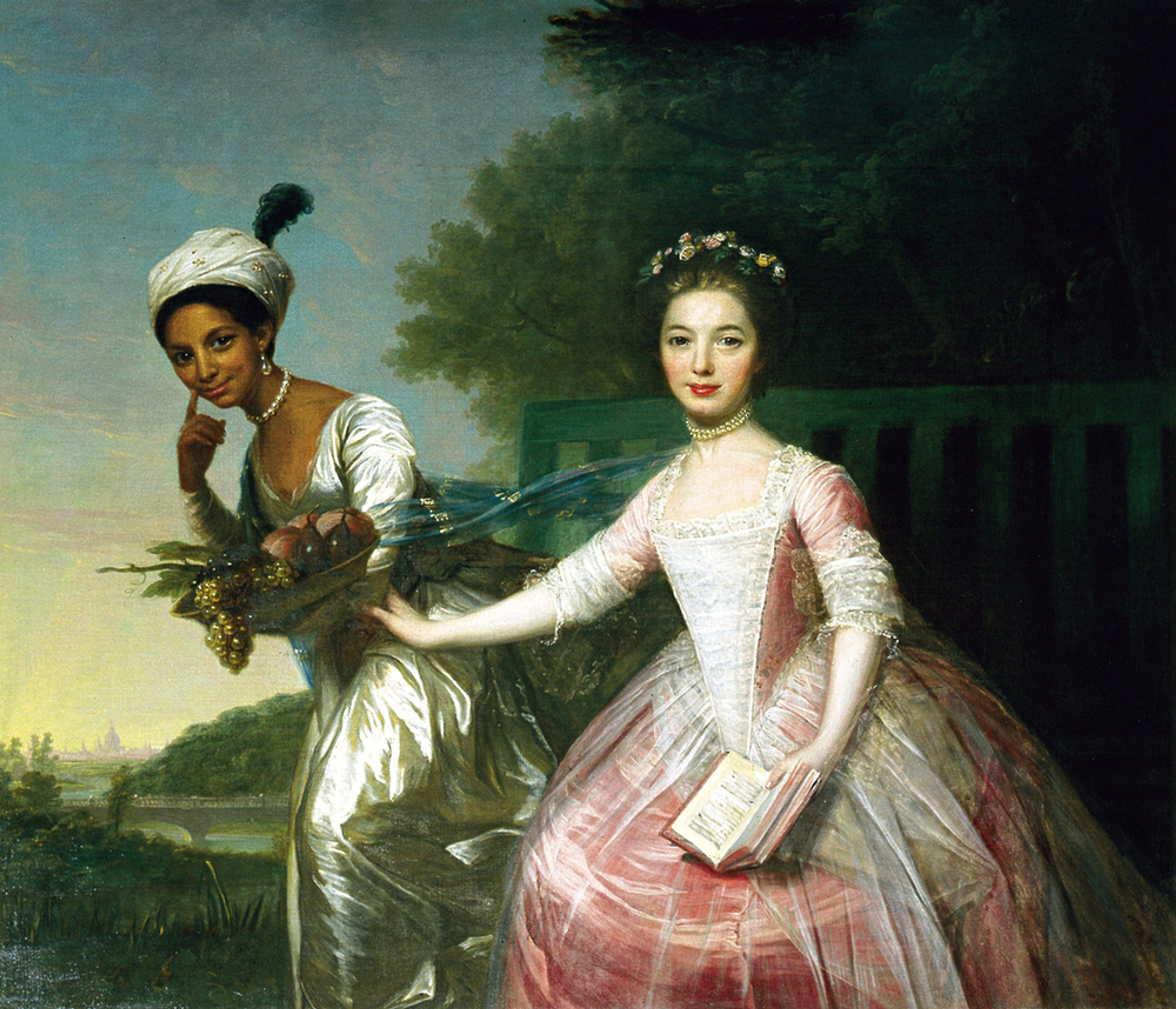
As imperialist war raged in the Americas, Caribbean, Australia, and beyond, the jewelry industry benefited: colored gems from all over the empire became newly available. A mix of artistic influences from around Europe contributed to the feminine, glittering jewels of the era. Dense, ornate Baroque motifs from Italy showed up in Georgian jewelry, as did French Rococo’s undulating flora and fauna. Neoclassical style made use of Greek and Roman motifs, which were newly popular due to the recently uncovered ruins of Pompeii and Herculaneum. Lapidary methods improved: the dome-shaped rose cut was popular, as was the “old mine cut,” a very early iteration of today’s round brilliant cut.
The boat-shaped marquise diamond cut was developed around this time, supposedly to imitate the smile of Louis XV’s mistress, the marquise de Pompadour. Paste — an imitation gemstone made from leaded glass — was newly developed in the 18th century, and set into jewelry with the same creativity and care as its more precious counterparts. Real and imitation gems were almost always set in closed-backed settings, lined on the underside with thin sheets of foil to enhance the color of the stone and highlight it's sparkle. This makes Georgian rings tough for modern women to wear, especially on an everyday basis: genteel, jewelry-owning ladies of the 18th century were not famous for working with their hands like we are. Nor did they wash their hands as much as we do. Water will virtually ruin a foiled setting, so take special care with your Georgian ring. Very little jewelry from this period is still in circulation, and it's very difficult to repair.
please note:Terms of Sale
Antiques can be returned unworn and in original condition within 10 days of delivery for an exchange or refund minus the cost of shipping. Once a piece has been altered, including ring re-sizing, it is FINAL SALE.