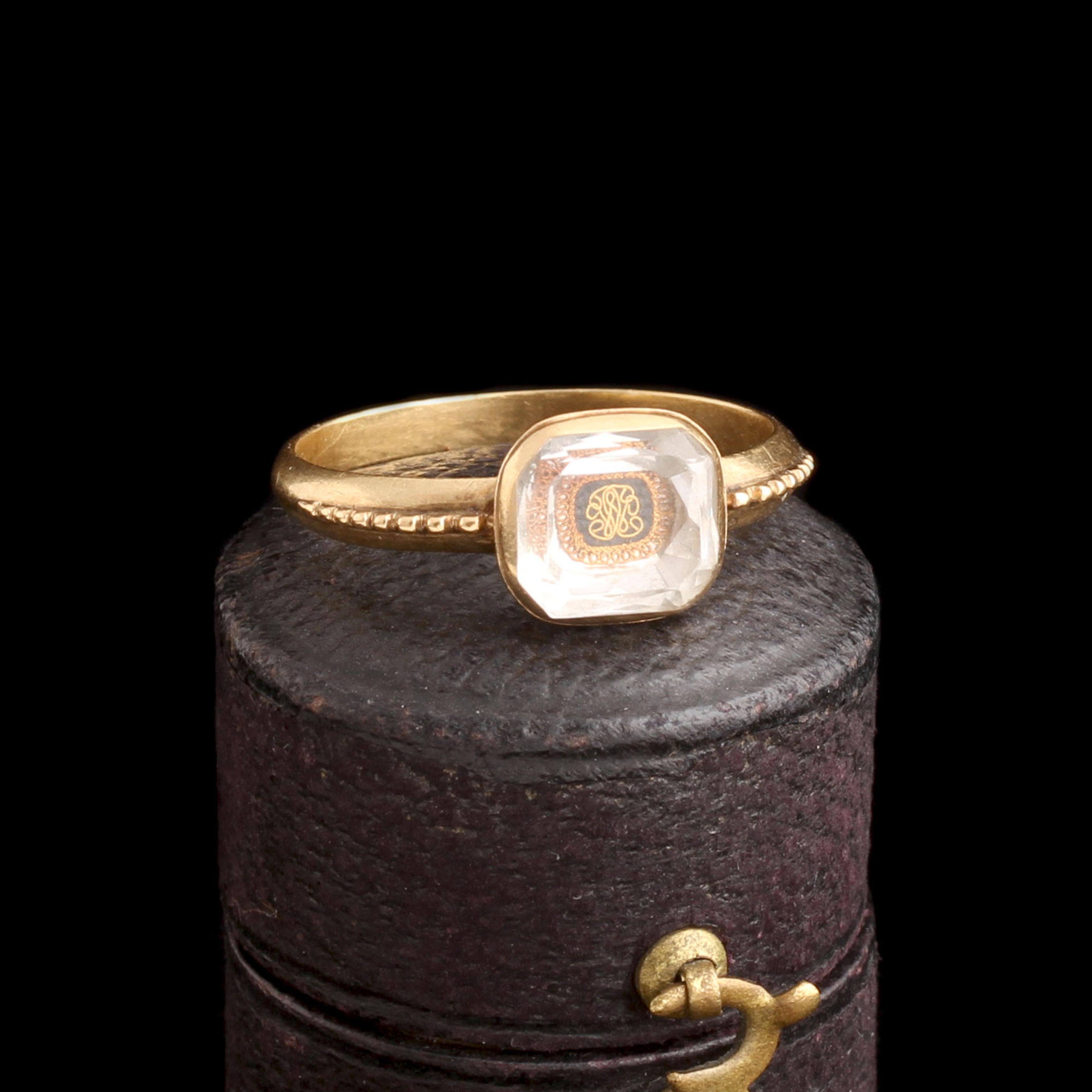
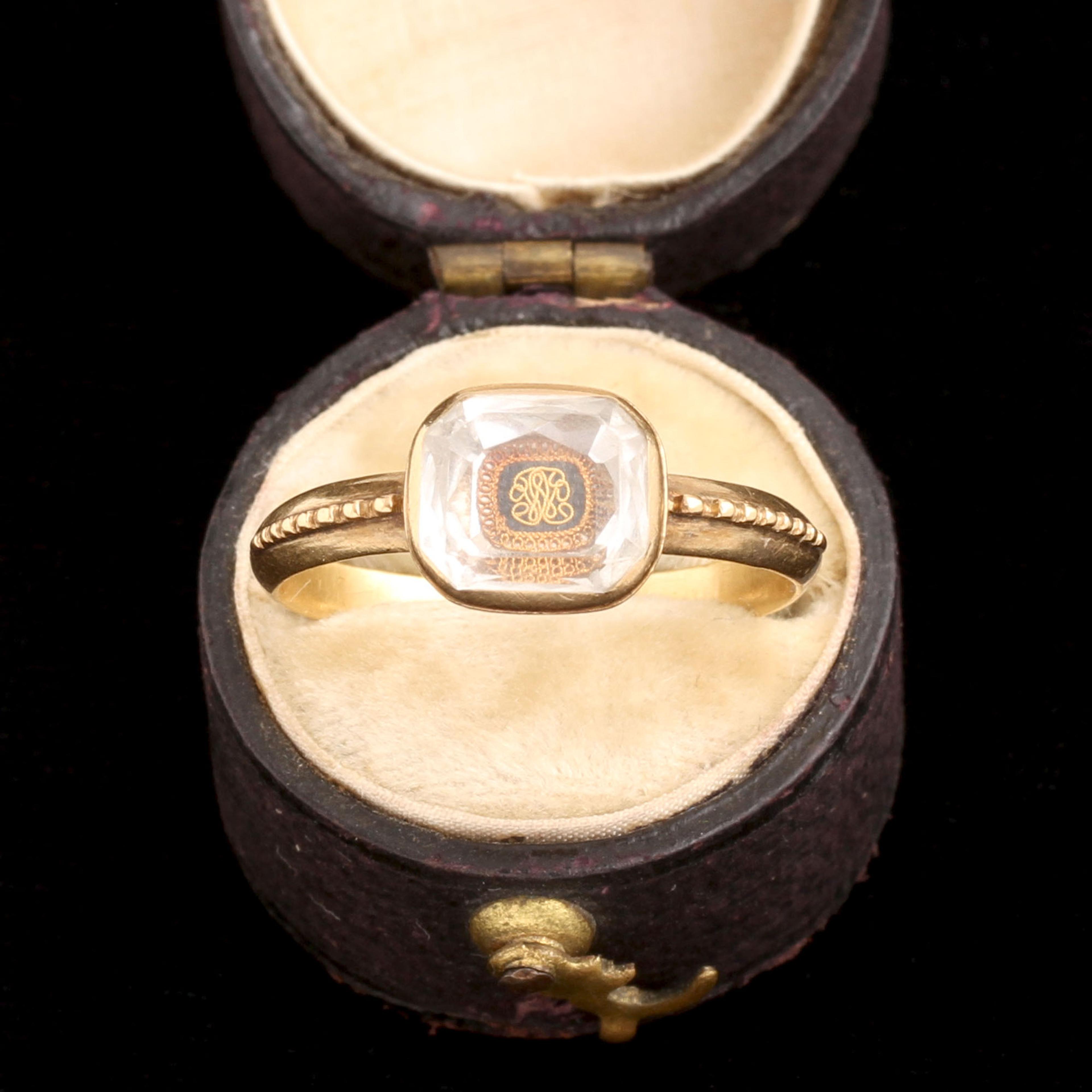
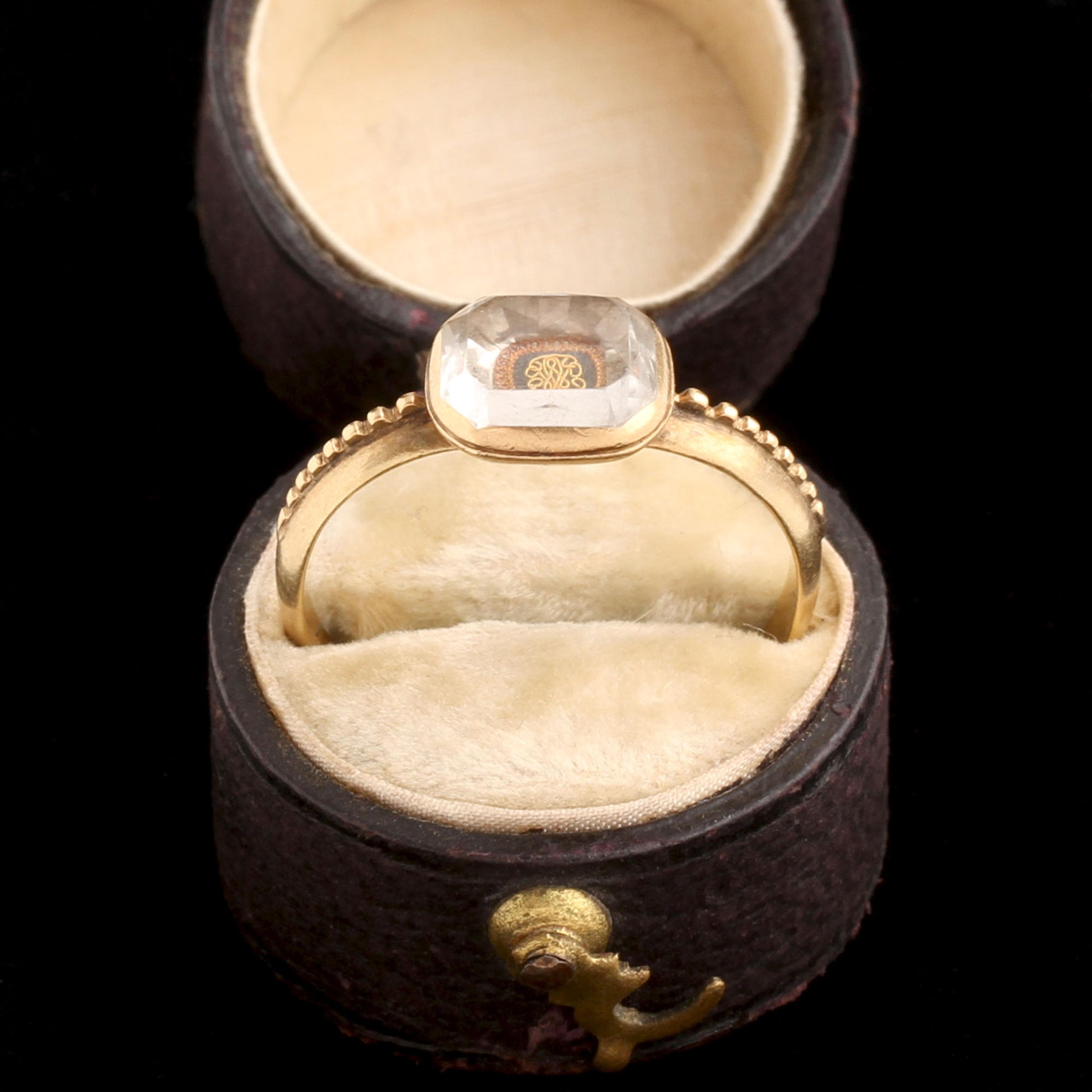

The term “Stuart crystal” refers to jewelry made in the decades following the execution of King Charles I in 1649, when loyalists to the Stuart monarchy memorialized the martyred king through rings similar to this. Flat-topped rock crystal was used to protect and display intimate elements beneath it: gold wire ciphers, initials, or locks of hair. While early examples were explicitly political, the form quickly evolved. By the late 17th and early 18th centuries, Stuart crystal jewels become more private in meaning, commemorating individual relationships. Here, a delicately worked gold cipher and hairwork sit beneath rock crystal, framed by fine granulation that shows off a talented goldsmith's skills. Stuart crystal rings are uncommon to begin with, and examples that retain their original crystal, hairwork, and fine gold details in this level of condition are WILDLY scarce.
thedetails
- Materials
22k gold (tests), rock crystal, hair, gold thread
- Age
c. 1700
- Condition
Excellent
- Size
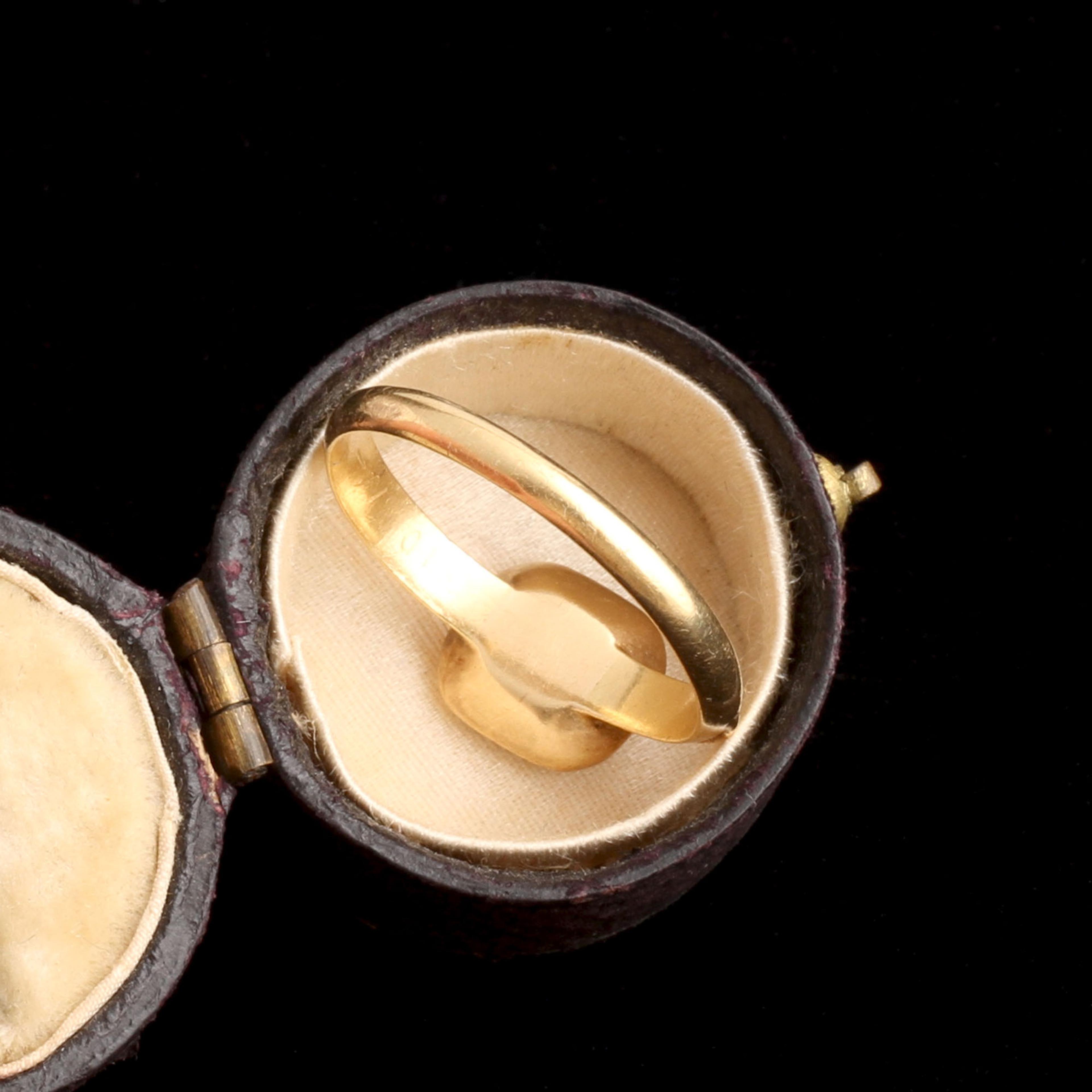
8, can be resized; 8.2mm head, 2.2mm shank
Need more photos?
Send us an email to request photos of this piece on a model.
Aboutthe
StuartEra
1603 — 1714
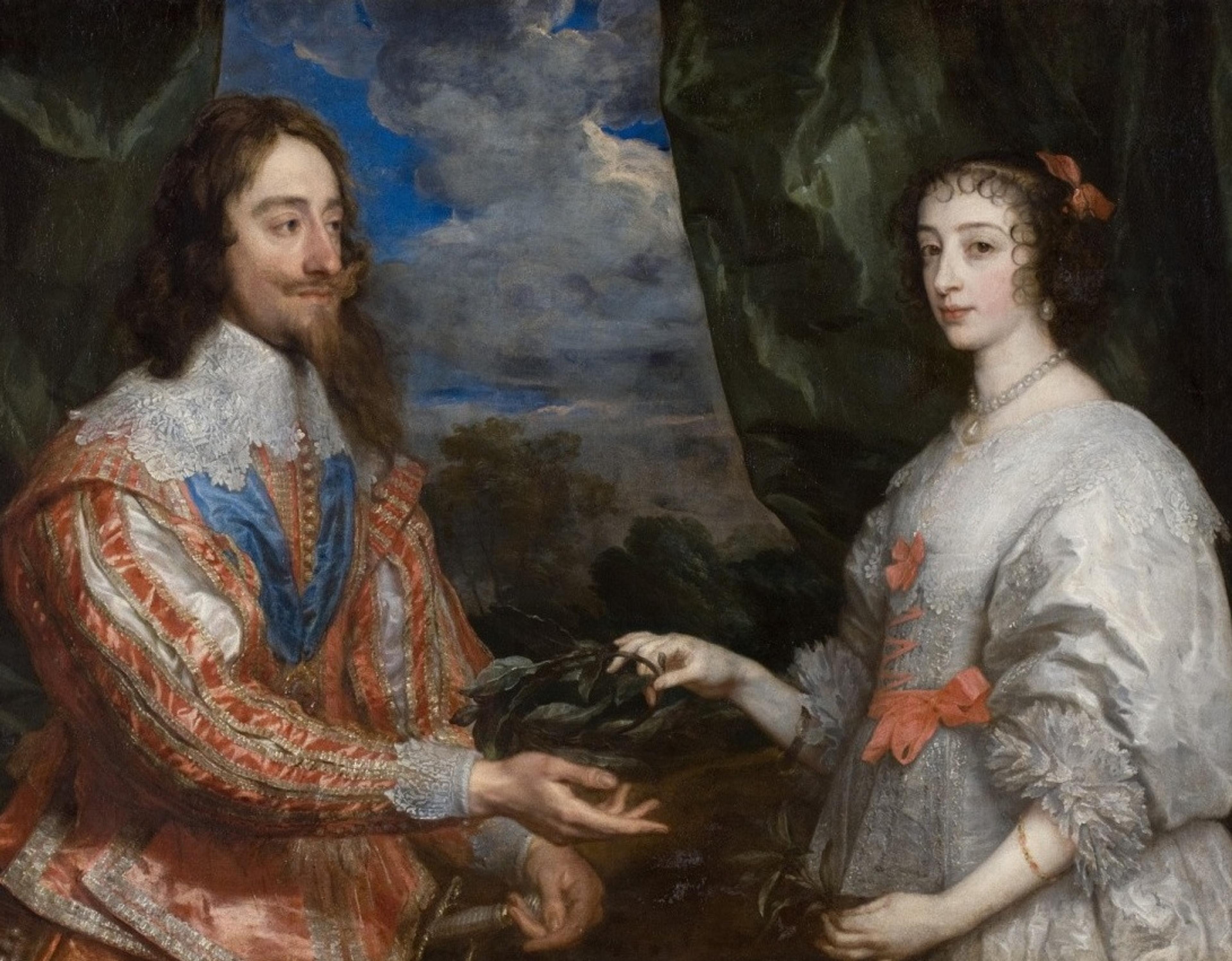
A new era dawned when Queen Elizabeth — the last Tudor monarch — died without an heir. The monarchy was temporarily displaced by the Commonwealth of England from 1649 to 1660 by Oliver Cromwell, but was restored — aka "The Restoration" — as Charles II was invited to take the throne. His father, Charles I, had been beheaded in 1649, and most of the jewelry we see from this period was at least stylistically related to this controversial political event. During this time, discoveries and innovations transformed England and Scotland, which were conjoined after a long period of feuding. Coffee became a new trendy beverage, with 600 coffeehouses in London all catering to a different type of clientele. This imported novelty beverage was possible because of the UK's rapidly expanding worldwide trade network. Not yet interested in acquiring territories, the island nation focused instead on making a fortune exporting wool and importing goods like slaves, sugar, and tea. Everyone (except the enslaved people, of course) benefited from the new merchant class that arose, and in the process the Royal Navy became the most powerful in the world. The look of London changed, too — after the Great Fire of 1666, Christopher Wren was hired to rebuild the city's damaged churches, with his greatest accomplishment being St. Paul's Cathedral.
please note:Terms of Sale
Antiques can be returned unworn and in original condition within 10 days of delivery for an exchange or refund minus the cost of shipping. Once a piece has been altered, including ring re-sizing, it is FINAL SALE.