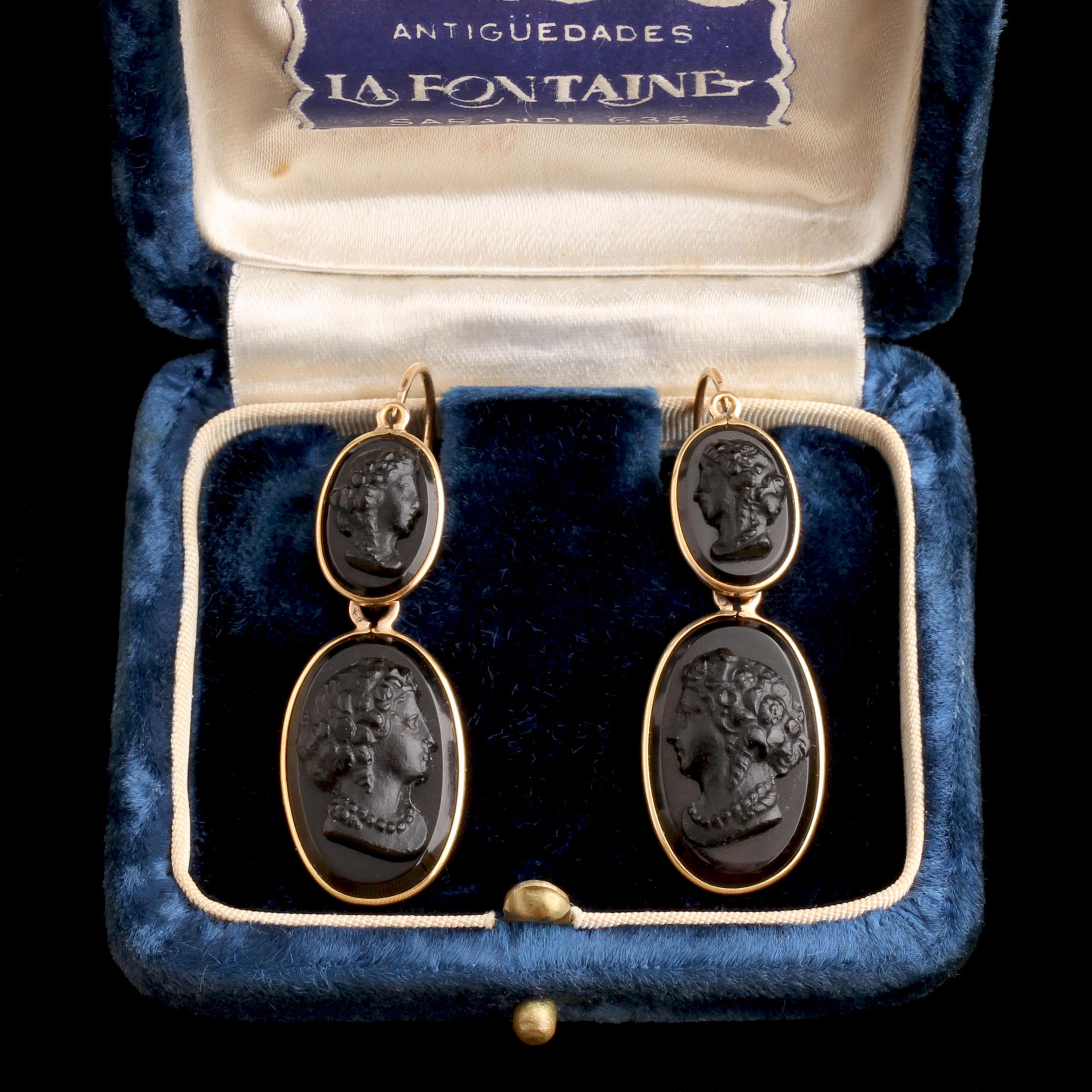
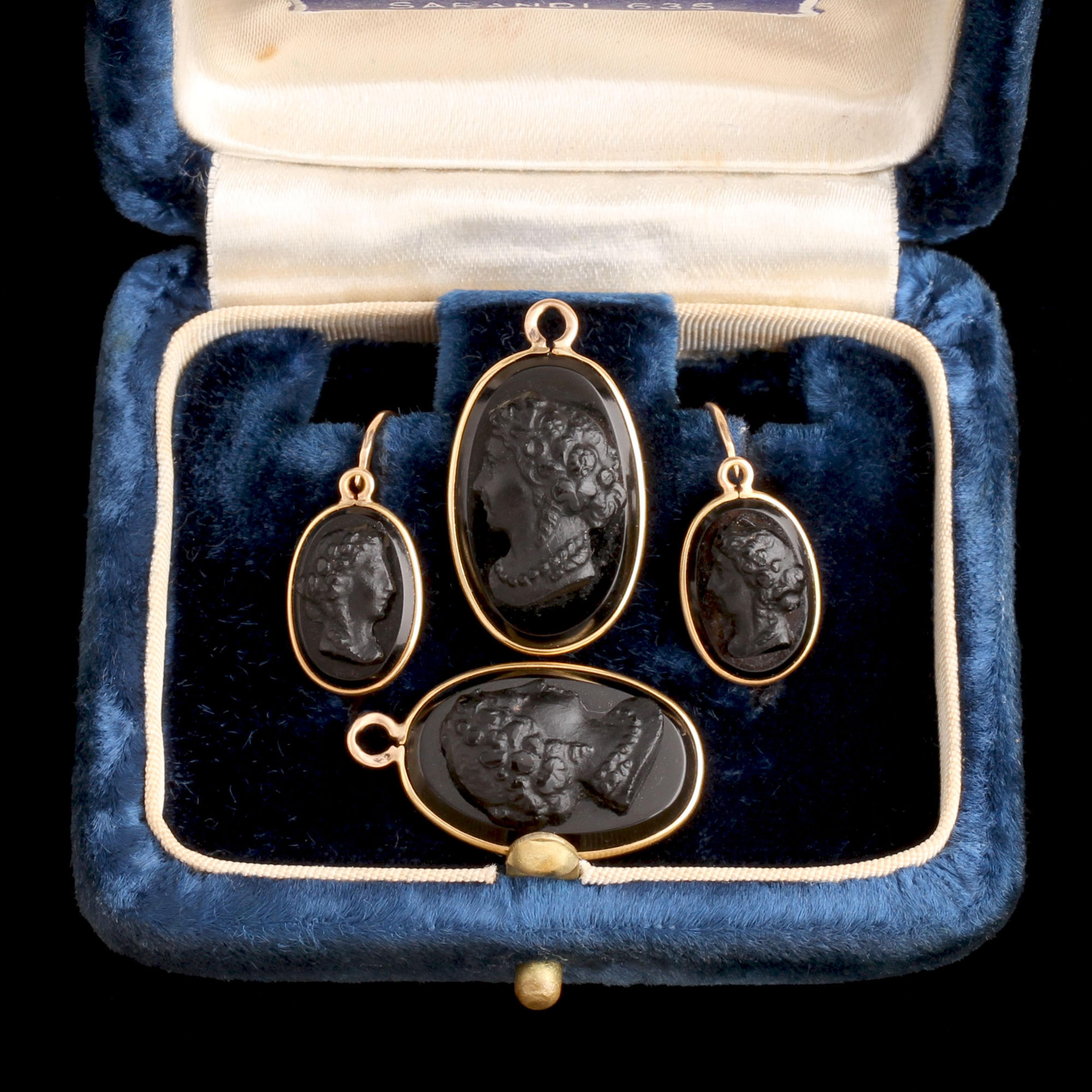
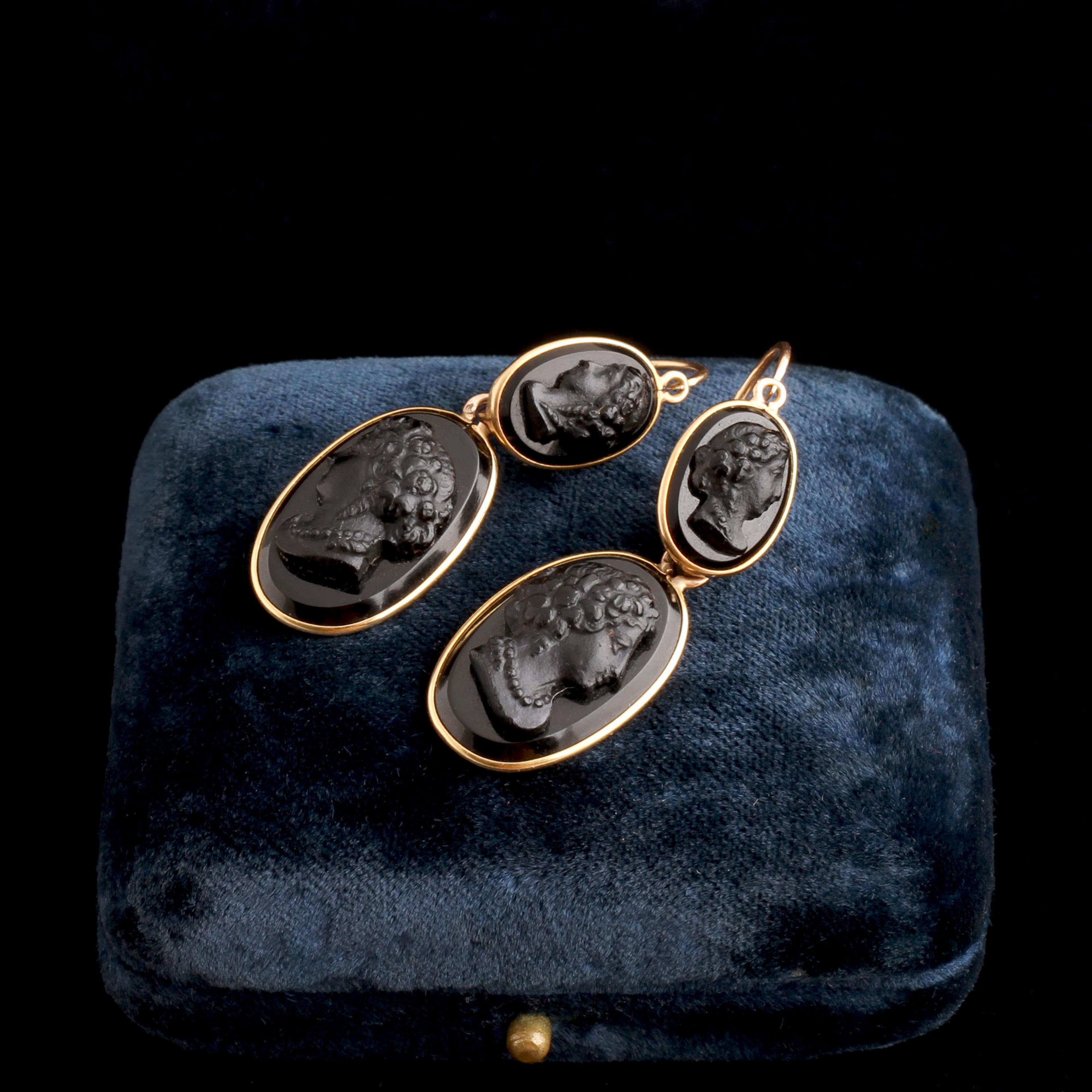
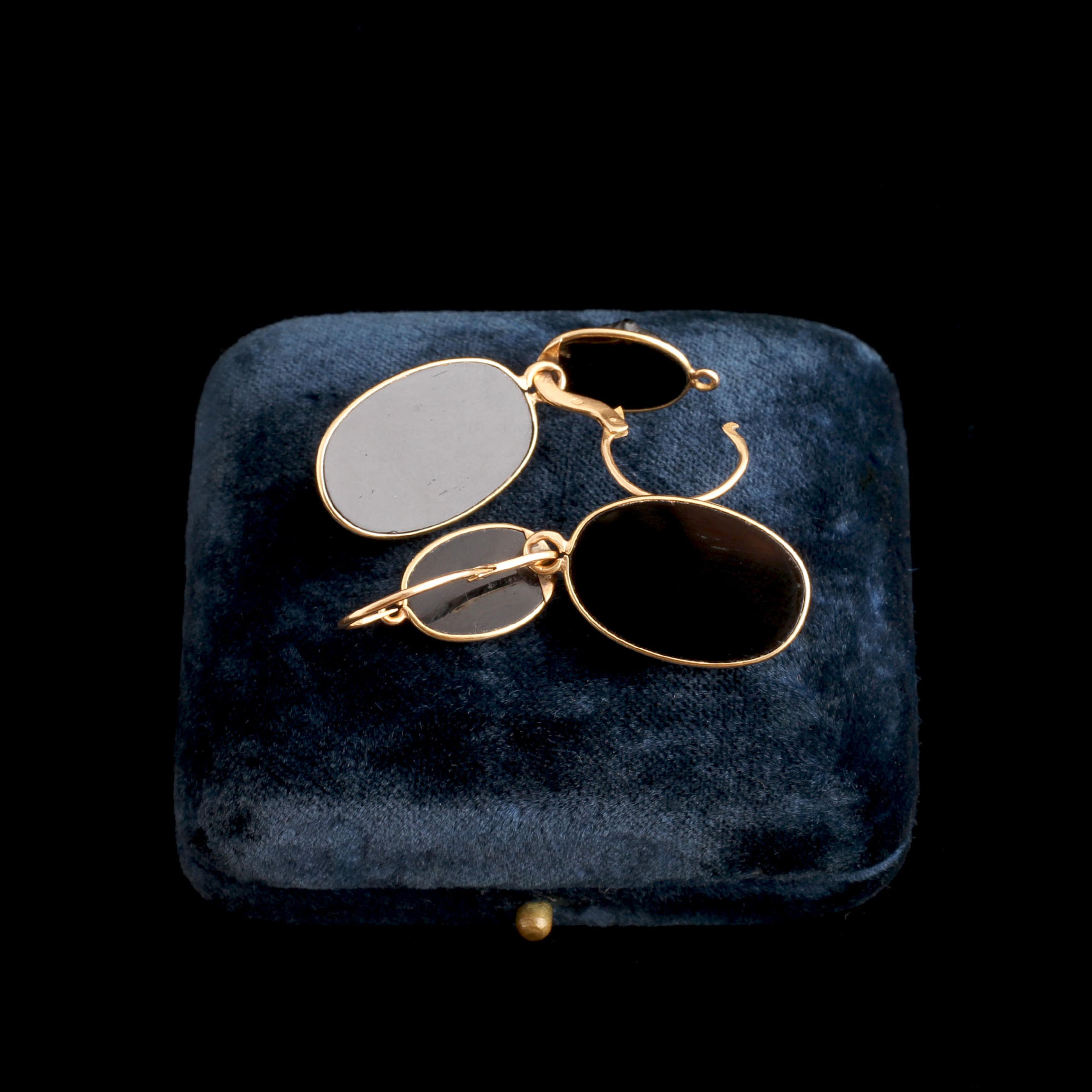
These are classic Victorian day-to-night earrings, designed to be worn two ways. During daytime, the upper cameo alone could be worn as a shorter, lighter drop. In the evening, the lower pendant section was added, creating a longer and more formal silhouette. In the 19th century, women typically owned fewer pieces of jewelry, so adaptability mattered. Pressed glass cameos offered crisp classical profiles at a more accessible price point, while still referencing the hardstone carved cameos favored at the height of Neoclassicism.
thedetails
- Materials
14k gold (tests), pressed glass
- Age
c. 1860
- Condition
Very good
- Size
1 7/8" total length measured from the top of the ear wire, 1/2" width
Need more photos?
Send us an email to request photos of this piece on a model.
Aboutthe
VictorianEra
1837 — 1901
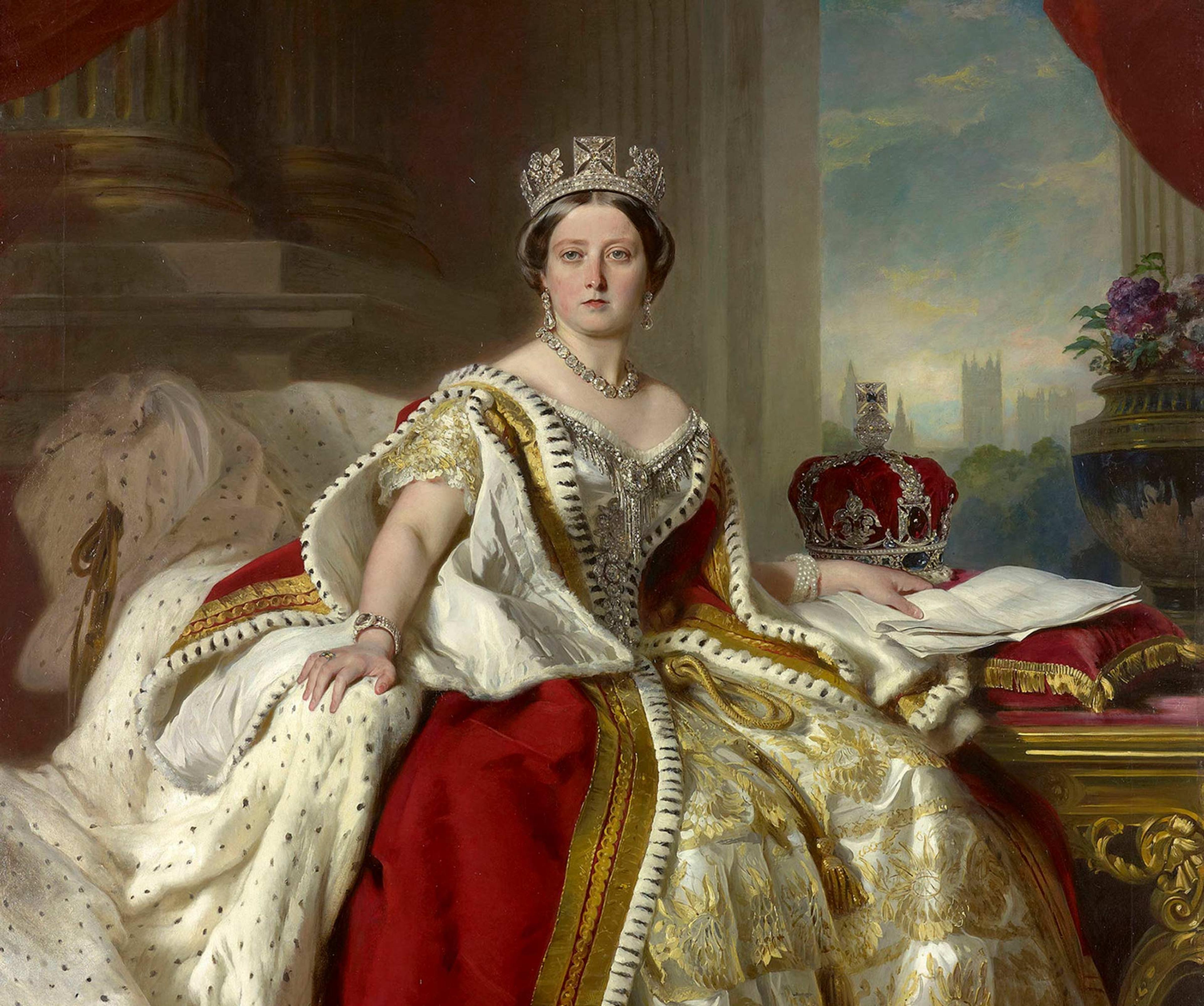
The Victorians were avid consumers and novelty-seekers, especially when it came to fashion, and numerous fads came and went throughout the 19th century. In jewelry, whatever fashion choices Queen V. made reverberated throughout the kingdom. The Romantic period reflected the queen’s legendary love for her husband, Albert.
Jewelry from this period featured joyful designs like flowers, hearts, and birds, all which often had symbolic meaning. The queen’s betrothal ring was made in the shape of a snake, which stood for love, fidelity, and eternity. The exuberant tone shifted after Prince Albert passed away in 1861, marking the beginning of the Grand Period. Black jewelry became de rigeur as the Queen and her subjects entered “mourning,” which at the time represented not just an emotional state, as we conceive of it today, but a specific manner of conduct and dress. She wore the color black for the remainder of her life, and we see lots of black onyx, enamel, jet, and gutta percha in the jewelry from this time. Finally, during the late Victorian period, which transitioned along with a rapidly changing world into the “Aesthetic Movement”, there was a return to organic and whimsical motifs: serpents, crescent moons, animals, and Japonaisserie designed for the more liberated “Gibson Girl”. During the second half of the 19th century, America entered the global jewelry market, with Tiffany and Co. leading the way. Lapidaries continued to perfect their techniques, and the old European cut emerged toward the end of the Victorian period. The discovery of rich diamond mines in South Africa made the colorless stones more accessible than ever before.
please note:Terms of Sale
Antiques can be returned unworn and in original condition within 10 days of delivery for an exchange or refund minus the cost of shipping. Once a piece has been altered, including ring re-sizing, it is FINAL SALE.