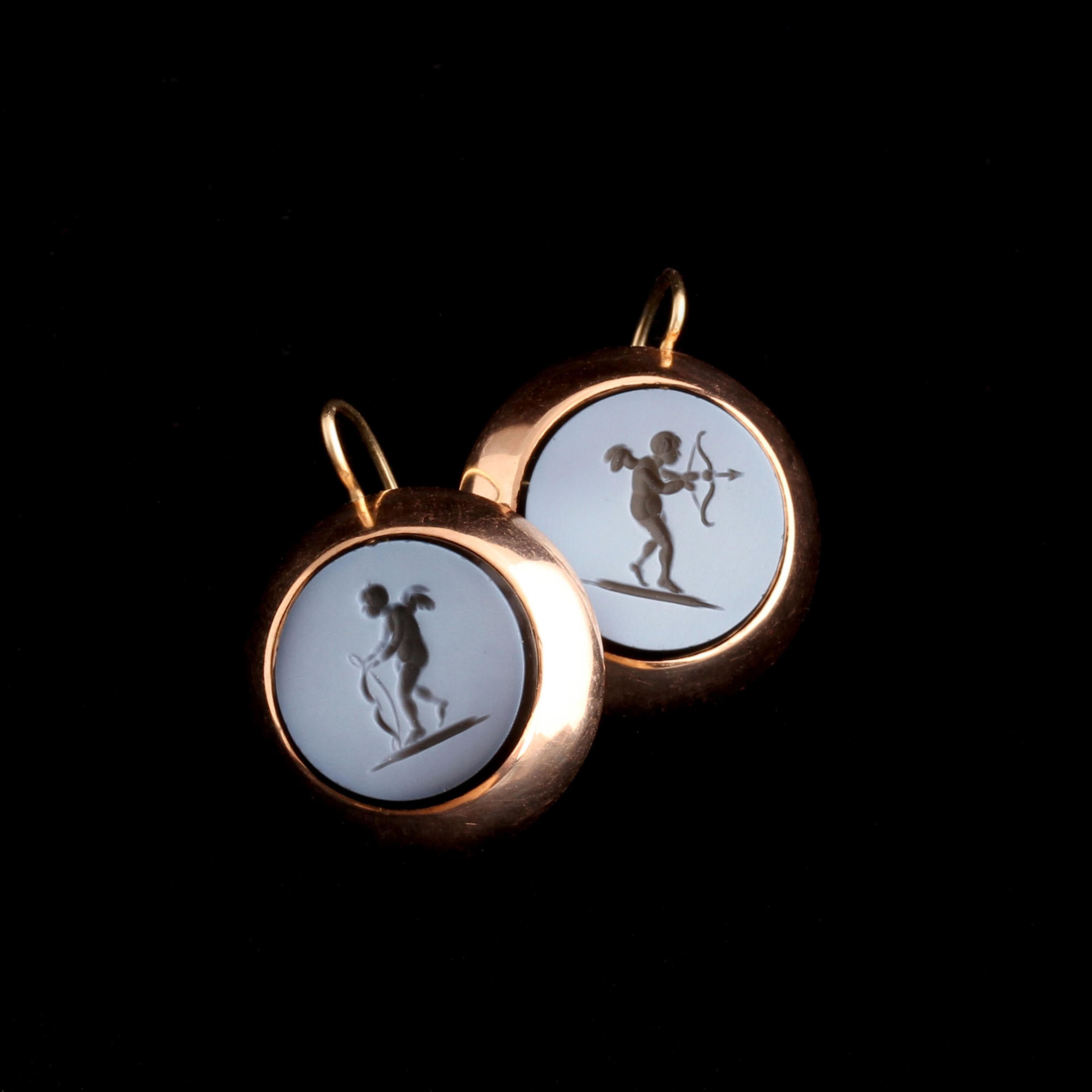
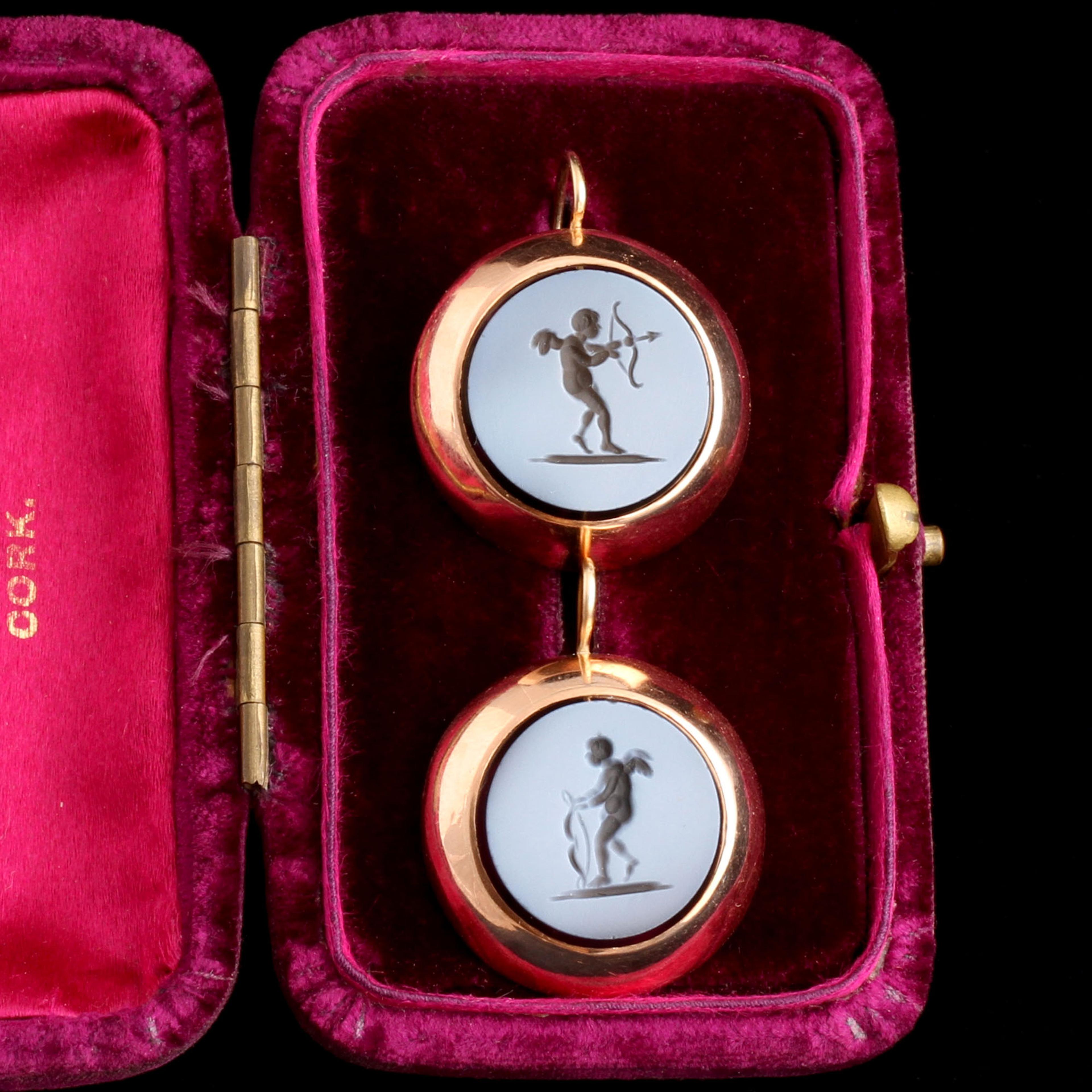
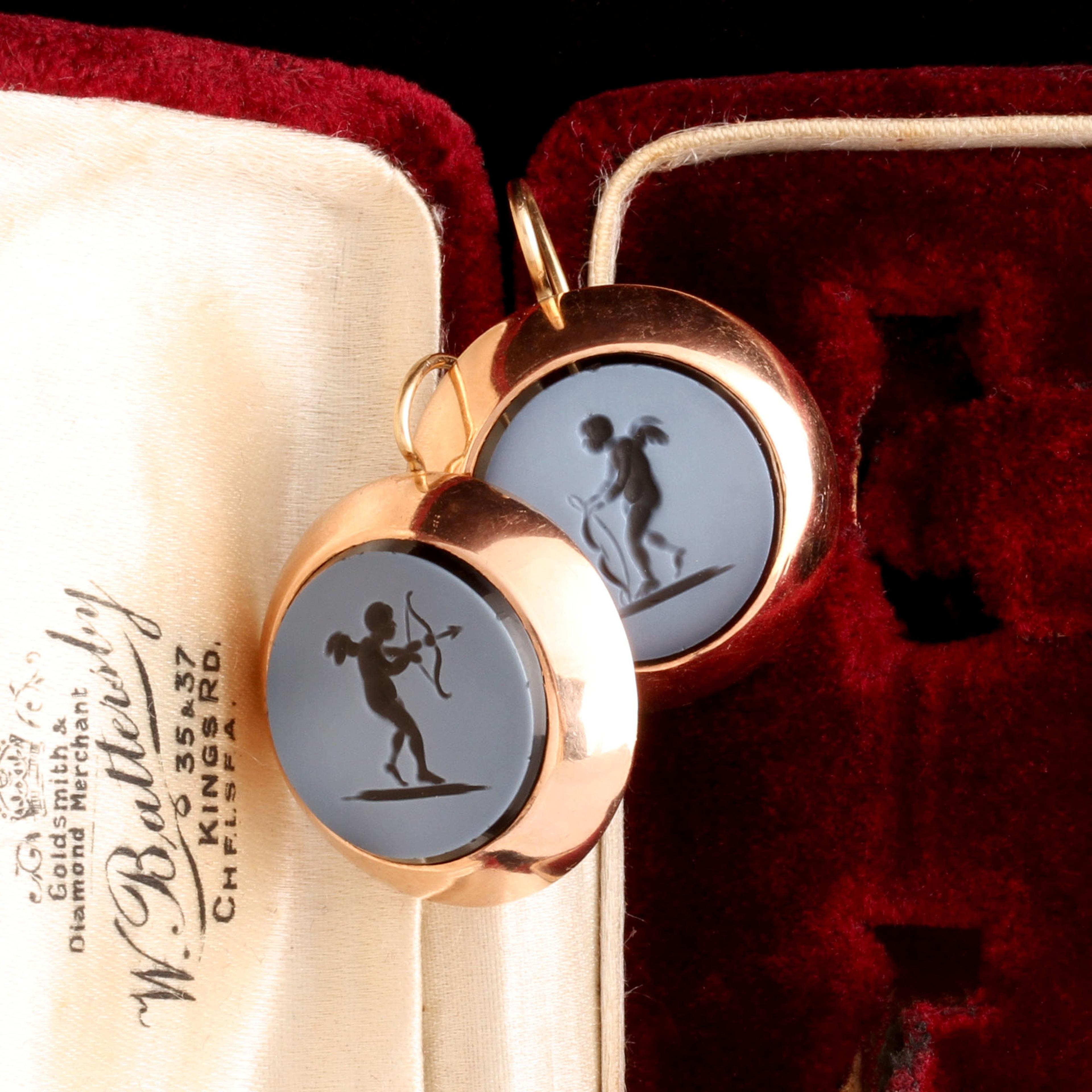
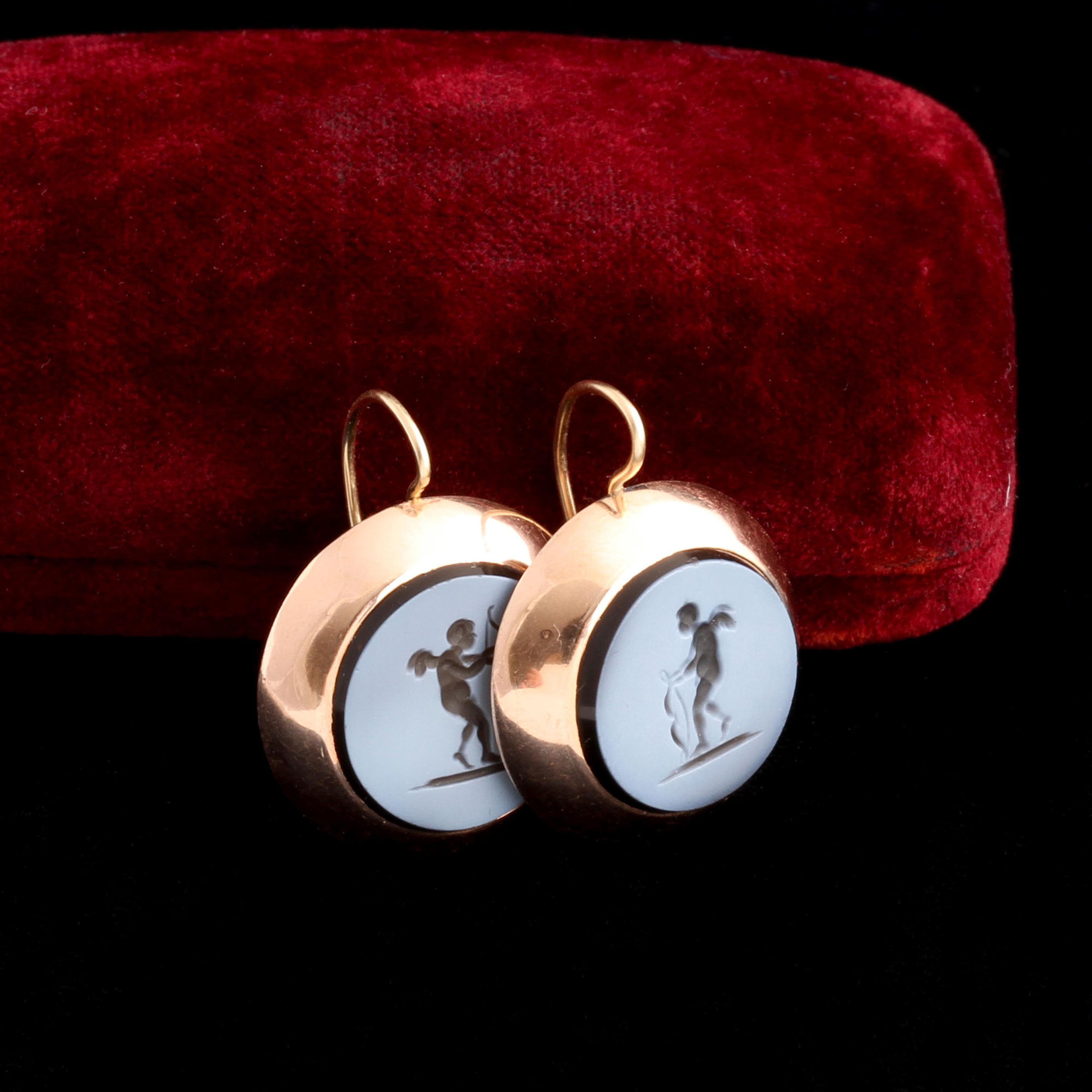
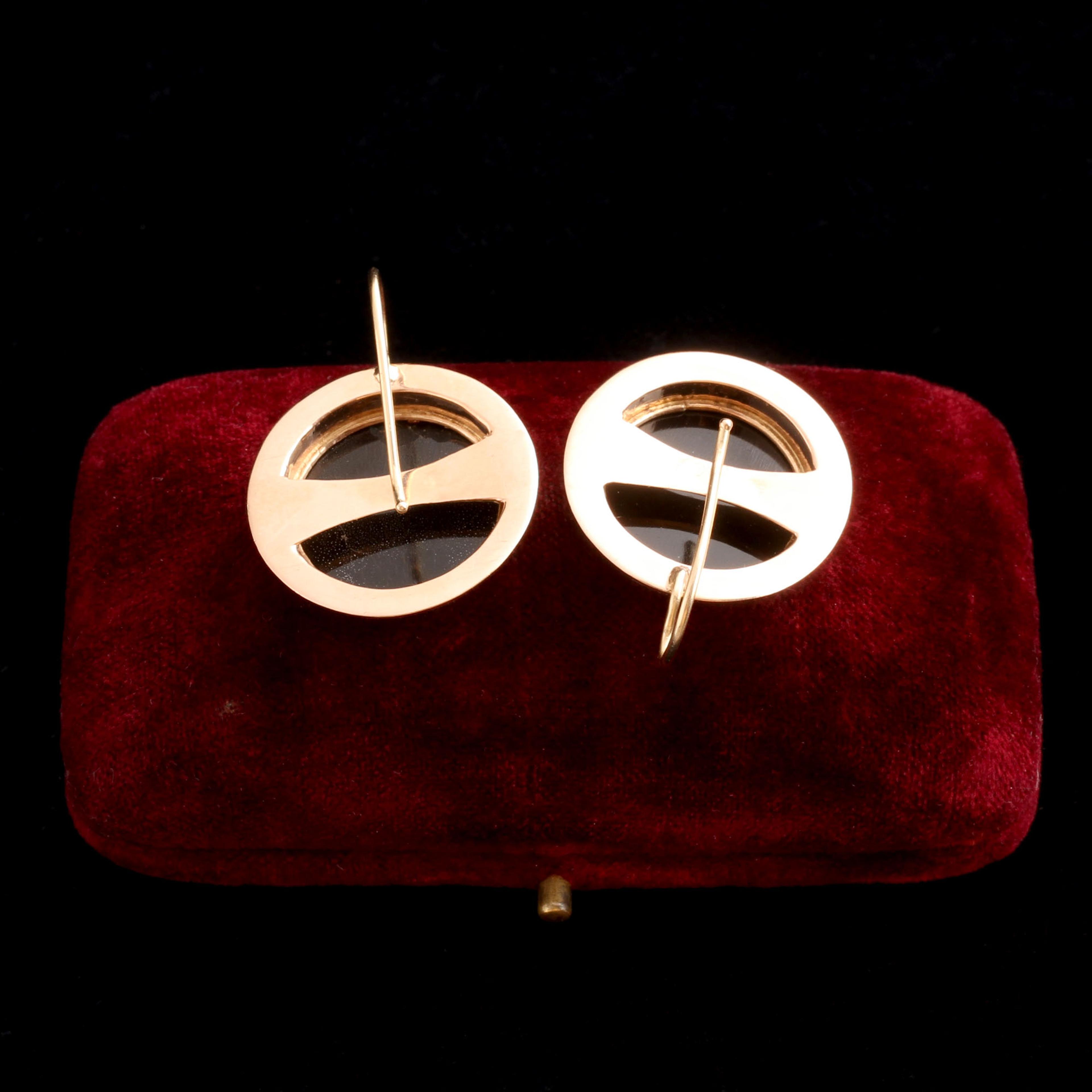
Cupid was appealing to the Victorians because he allowed them to express romantic desire through the respectable language of classical mythology. Baby cupid was playful, mischievous, and hinted at the erotic with that arrow, but there was no impropriety (unlike with, say, Pan, who was a horny half-goat, or Priapus who was known for his boner. Satyrs, also, were often depicted drunk and chasing women - they represented the appetites that Victorian society was trying to keep under wraps. Cupid was DECENT; he made ancient erotic symbolism made socially acceptable, especially in the refined visual language of Neoclassical gem engraving. Ironically, the excavations at Pompeii and Herculaneum revealed a far more sexually explicit, penis-decorated ancient world than many admirers of classical antiquity expected. Here, two cupids - one resting, one taking aim - are carved into contrasting layers of nicolo onyx.
thedetails
- Materials
14k gold (tests), nicolo onyx
- Age
c. 1870
- Condition
Very good - ear wires are newer additions
- Size
1 1/8" length measured from the top of the ear wire, 7/8" diameter
Need more photos?
Send us an email to request photos of this piece on a model.
Aboutthe
VictorianEra
1837 — 1901
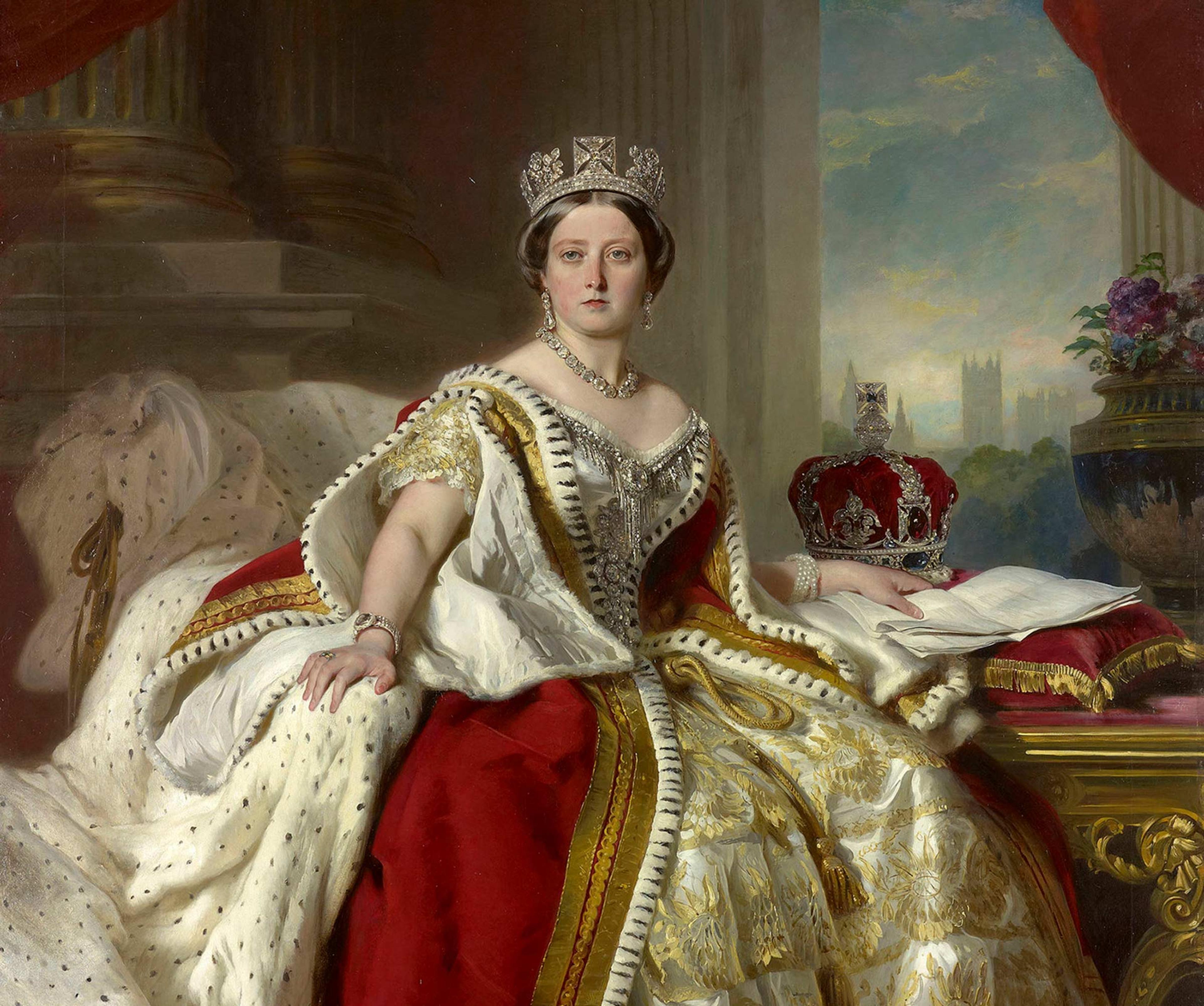
The Victorians were avid consumers and novelty-seekers, especially when it came to fashion, and numerous fads came and went throughout the 19th century. In jewelry, whatever fashion choices Queen V. made reverberated throughout the kingdom. The Romantic period reflected the queen’s legendary love for her husband, Albert.
Jewelry from this period featured joyful designs like flowers, hearts, and birds, all which often had symbolic meaning. The queen’s betrothal ring was made in the shape of a snake, which stood for love, fidelity, and eternity. The exuberant tone shifted after Prince Albert passed away in 1861, marking the beginning of the Grand Period. Black jewelry became de rigeur as the Queen and her subjects entered “mourning,” which at the time represented not just an emotional state, as we conceive of it today, but a specific manner of conduct and dress. She wore the color black for the remainder of her life, and we see lots of black onyx, enamel, jet, and gutta percha in the jewelry from this time. Finally, during the late Victorian period, which transitioned along with a rapidly changing world into the “Aesthetic Movement”, there was a return to organic and whimsical motifs: serpents, crescent moons, animals, and Japonaisserie designed for the more liberated “Gibson Girl”. During the second half of the 19th century, America entered the global jewelry market, with Tiffany and Co. leading the way. Lapidaries continued to perfect their techniques, and the old European cut emerged toward the end of the Victorian period. The discovery of rich diamond mines in South Africa made the colorless stones more accessible than ever before.
please note:Terms of Sale
Antiques can be returned unworn and in original condition within 10 days of delivery for an exchange or refund minus the cost of shipping. Once a piece has been altered, including ring re-sizing, it is FINAL SALE.